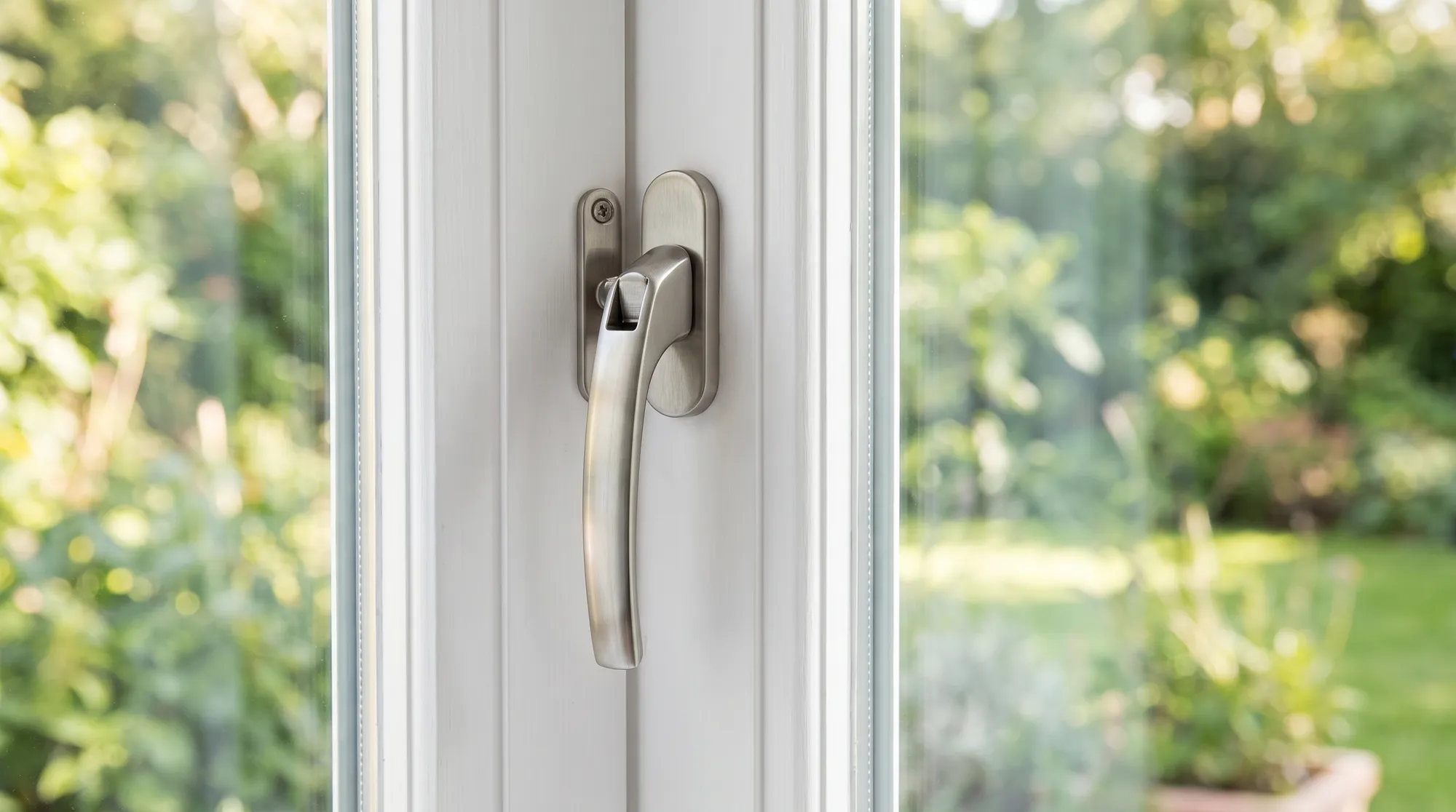
Most homeowners only think about window hardware on the day a crank refuses to turn or a lock will not close. In a Quebec winter, that day usually arrives in January, when the metal is stiff, the sash is frosted in place and a forced handle can snap. A short round of care in the fall keeps locks, cranks, hinges and multipoint hardware moving smoothly through the cold and protects the seal that keeps drafts out.
Why Window Hardware Works Harder in Winter
Window hardware is a small mechanical system made of gears, arms, pivots, cams and keepers. In summer it moves freely, but cold changes almost everything about how it behaves. Grease thickens, metal and vinyl contract at different rates, and the rubber gaskets around the sash stiffen and push back harder when you close the window.
Moisture adds to the problem. Warm indoor air carries humidity toward the glass and the sash, and when it reaches the cold hardware it can condense and freeze inside the lock or around the operator. A crank that turned easily in September can feel locked solid on a morning at minus twenty, not because anything broke, but because ice and thick lubricant are fighting the gears.
The good news is that most winter hardware problems are preventable. Clean, lightly lubricated parts that are properly adjusted will keep working even through long cold snaps. The key is to do the care before the first deep freeze, while you can still open the windows fully and see every moving part.
Why Locking a Window Improves the Seal
Many people close a window and consider the job done, but on a casement, awning or tilt-and-turn window, the lock is what actually finishes the seal. Turning the handle draws the sash tight against the weatherstripping on every side of the opening. A window that is closed but not locked can leave a small gap along the lock side that lets cold air and moisture slip in.
This matters most on casement windows, which rely on compression rather than sliding contact. Multipoint locks pull the sash in at two or three points along the edge, so the gasket is pressed evenly from top to bottom. If only one lock point engages, you may feel a draft or see frost forming along one corner while the rest of the window stays clear.
Make it a habit to lock every window you are not using for the season. It improves comfort, reduces condensation along the edges and also takes pressure off the operator, which no longer has to hold the sash closed against the wind on its own.
Choosing the Right Lubricant: Silicone and Dry Film
The best lubricants for window hardware are the ones that stay thin in the cold and do not attract dirt. Silicone spray and dry-film lubricants based on PTFE both fit that description. They leave a light coating that keeps metal moving without turning into a sticky paste when the temperature drops.
Apply lubricant sparingly and wipe away any excess. A single short spray on a pivot or a cam is usually enough, and too much product simply collects dust that later behaves like sandpaper. Always clean the hardware first with a dry cloth or a soft brush so you are not sealing grit into the mechanism.
Silicone is also good for rubber gaskets, since it keeps them supple and helps prevent them from freezing to the sash. Use a separate cloth for the gasket so you do not transfer dirt from the hardware to the weatherstripping.
- Crank operators: a light spray of silicone or dry lubricant on the exposed gear and arm tracks.
- Hinges and friction stays: a small amount on the pivot points, then open and close the window several times.
- Multipoint lock bars and cams: a thin coat of dry-film lubricant along the sliding bar and on each cam.
- Sash locks on sliding and hung windows: a drop of silicone on the cam pivot, wiped clean afterward.
- Rubber gaskets: silicone applied with a cloth, never sprayed directly across the glass.
Products to Keep Away From Window Hardware
Some common household products do more harm than good on window hardware. Heavy greases and oil-based sprays feel smooth when applied, but in the cold they thicken and trap dust, which slowly grinds down gears and pivots. Penetrating sprays designed to loosen rust are also a poor choice, because they evaporate quickly and leave little lasting protection.
Petroleum products can also damage vinyl and rubber. If they reach the gaskets, they can cause swelling, softening or cracking over time, which weakens the seal you are trying to protect. Keep these products away from the window altogether rather than trying to be careful around the gasket.
- Heavy automotive or wheel-bearing grease
- Household cooking oils or general-purpose oils
- Penetrating rust sprays used as a regular lubricant
- Graphite powder on window mechanisms, which can stain light-colored sashes
- Any solvent-based cleaner on rubber gaskets or vinyl
Frozen Crank or Lock: Do Not Force It
When a crank will not turn or a handle will not move on a cold morning, the instinct is to push harder. That is the fastest way to strip the gears in an operator, bend a lock arm or tear a gasket that has frozen to the sash. Most frozen hardware releases on its own once the ice melts, so patience is usually the whole solution.
Start by raising the room temperature slightly and letting the window warm up for an hour or two. A hair dryer on a low setting, held a safe distance from the hardware, can speed things up, but avoid open flames and heat guns, which can warp vinyl and crack glass. Once the handle moves, open the window a little and check whether the gasket has torn.
If the same window freezes over and over, the root cause is usually humidity or air leakage rather than the hardware itself. Lowering indoor humidity and making sure the window is properly locked will often stop the cycle.
- Never use a tool or extra leverage on a frozen crank or handle.
- Warm the room and wait before trying again.
- Use gentle, indirect heat only, never an open flame.
- Once it opens, dry the hardware and apply a light coat of silicone.
- Check the gasket for tears before closing and locking again.
Checking Keepers, Strikes and Multipoint Locks
Keepers, also called strikes, are the small metal or nylon parts fixed to the window frame that the lock cams hook into. If a keeper is loose, worn or slightly out of position, the cam may not grab it fully, and the sash will not pull in tight. You will often notice this as a handle that closes too easily or a lock point that clicks without resistance.
Before winter, open each window and look at every keeper. Tighten any loose screws, clean out debris and check that nothing is cracked. Then close and lock the window slowly and watch each cam engage. A properly adjusted lock should require a firm but smooth push, with a noticeable tightening at the end of its travel.
Some keepers can be adjusted to pull the sash in slightly more, which helps when a gasket has lost a little of its thickness over the years. If you are unsure how your model adjusts, or the parts are cracked, it is better to have them replaced than to force a lock that no longer lines up.
When Window Hardware Should Be Replaced
Good hardware lasts a long time, but it does wear out. Operators in particular take a lot of stress, especially on large casement windows exposed to wind. Replacing a worn part is often a simple job that restores both smooth operation and a tight seal, without replacing the whole window.
On older windows, however, failing hardware can be a sign of deeper problems such as a sash that has sagged, a frame that has moved or parts that are no longer available. In that case, it is worth comparing a repair with a new, better-sealing window. The exact figure depends on your project, so the easiest way to know where you stand is to request a free estimate.
- The crank spins without moving the sash, a sign of stripped gears.
- The handle or lock is cracked, bent or loose even after tightening.
- One or more lock points no longer engage their keepers.
- The window cannot be locked without heavy force.
- Replacement parts for your model are no longer made.
Frequently Asked Questions
What is the best lubricant for window cranks in winter?
Silicone spray or a dry-film PTFE lubricant is best. Both stay thin in the cold and do not attract dust the way heavy grease does. Clean the operator first, then apply a light coat and wipe off any excess.
Can I use WD-40 on my window hardware?
A penetrating spray can help loosen a stuck part once, but it is not a good regular lubricant. It evaporates quickly and offers little protection through the winter. Follow it with a silicone or dry lubricant, and keep it away from rubber gaskets.
Why does locking my casement window stop the draft?
The lock pulls the sash tight against the weatherstripping. A casement that is closed but not locked can leave a small gap along the lock side, which lets cold air and moisture in. Locking engages every lock point and presses the gasket evenly.
What should I do if my window crank is frozen?
Do not force it. Warm the room, wait an hour or two and try again gently. A hair dryer on a low setting can help, but never use an open flame or extra leverage, which can strip the gears or tear the gasket.
How often should window hardware be maintained?
Once a year is enough for most homes, ideally in early fall before the first deep freeze. Windows exposed to strong wind or salt air may benefit from a quick check again in spring.
How much does it cost to replace window hardware?
It depends on the type of window, the parts involved and whether the window itself is still in good condition. The exact figure depends on your project, so request a free estimate and we will assess what makes the most sense.