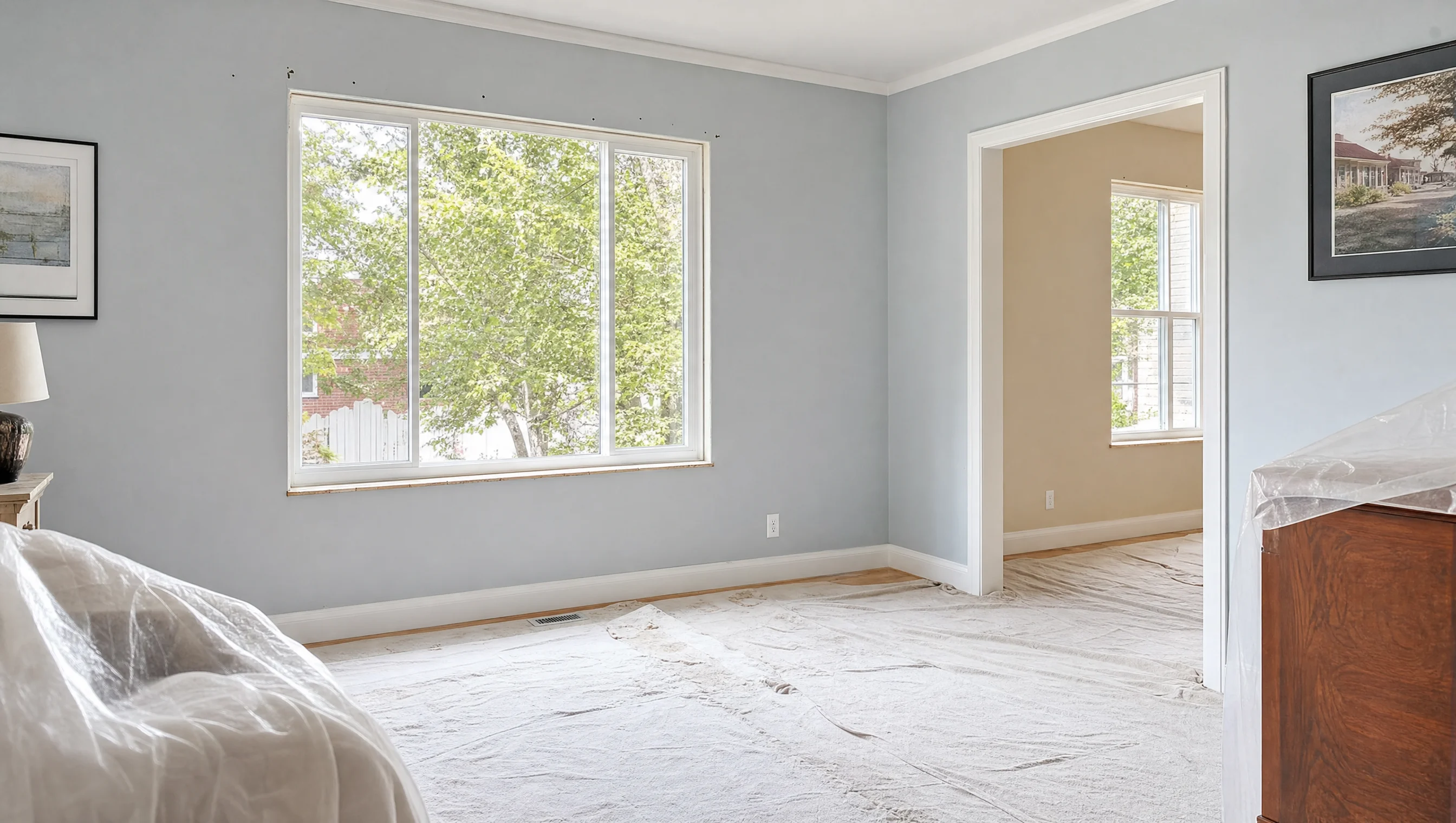
A smooth installation depends as much on your prep work as on the crew’s skill. The week before the truck arrives, an afternoon of clearing furniture, trimming shrubs, and planning around pets will save hours of delay and protect your belongings. Here is a homeowner’s checklist tuned to the realities of a Quebec installation — including what changes when you are working through a cold or rainy stretch.
A Few Days Before: Logistics and Communication
The smoothest installs start with a short conversation, not a flurry of activity on the morning of. Confirm the start date and arrival window with your installer, ask roughly how many openings the crew expects to complete each day, and find out whether they will need access to a water source or an interior outlet. A two-minute call now prevents the most common day-of surprises.
Sort out access and parking early. In dense Montreal neighbourhoods — the Plateau, Rosemont, Verdun — a work van needs to park close to the openings so crews can carry large units without hauling them a block. Reserve a spot, move your own vehicles the night before, and check whether your borough requires a temporary parking permit for a contractor vehicle.
Tell the people who need to know. If you live in a condo or a divided co-ownership, notify the syndicate and confirm any rules about elevator use, work hours, or common-area protection. Give neighbours a heads-up about a day of saw and drill noise, and make sure someone over 18 will be home or reachable to make finishing decisions.
Interior Prep, Room by Room
The goal inside is simple: give the crew a clear, protected 90 cm working zone around every opening. Removal generates dust and the occasional fragment of old caulk or wood, so anything fragile or hard to clean should be out of the way before work starts.
- Move furniture at least 90 cm away from each window so crews can work and set tools down
- Remove blinds, curtains, sheers, and curtain rods — brackets too, if they sit in the trim
- Take down wall art, mirrors, and shelves near the openings; vibration can shake them loose
- Cover floors and remaining furniture with drop cloths or old sheets (crews bring their own, but extra protection helps)
- Empty windowsills of plants, candles, and décor
- Disarm or bypass alarm sensors mounted on window frames and tell your monitoring company
Exterior Prep
Outside, the crew needs a clear path to every opening and somewhere to stage materials and the old units they remove. Clearing the perimeter also protects your landscaping — a freshly planted hydrangea pressed against the wall rarely survives an installation day.
- Trim shrubs, vines, and plants back about 60 cm from the wall under each window
- Move patio furniture, the barbecue, and any garden ornaments away from the work area
- Clear a parking space and a staging area close to the openings
- Coil and store garden hoses so they are not crushed by ladders or foot traffic
- Unlock gates and move bikes, recycling bins, or anything blocking the side of the house
- If you have window-mounted air conditioners, plan to remove them in advance
Pets, Kids, and the People at Home
An open wall, power tools, and a stream of crew members in and out of the house is a stressful combination for animals. Set up a closed, quiet room far from the active openings — with water, a litter box or pee pad, and something familiar — or board the pet for the day if it tends to bolt. An open exterior opening is an obvious escape route, and a frightened cat will use it.
Plan the same buffer for young children and for anyone working from home. Each opening is fully exposed for roughly 30 to 60 minutes during the swap, so the work zone is genuinely a construction site for short stretches. Move your home office to a finished room on the opposite side of the house and schedule any important video calls around the noisiest phases — demolition and saw work — rather than trying to talk over them.
If anyone in the household has a dust or scent sensitivity, mention it to the crew lead at the start. They can prioritize containment, close doors behind them, and let you know when the dustiest work is finished.
Day of Installation: What to Expect
Expect dust, noise, and brief moments without heating or cooling, since each opening sits exposed for 30 to 60 minutes while the old unit comes out and the new one goes in. Good crews work one or two openings at a time precisely to limit how much of the house is open to the outside at once, so the temperature swing in any given room stays manageable.
Quebec weather shapes the day more than homeowners expect. A reputable crew installs year-round, even in winter, using poly sheeting and working opening-by-opening to keep the interior tempered — but they will avoid exposing a wall during a downpour or a high-wind warning. If the forecast turns, do not be surprised if your installer reschedules a portion of the work; protecting your home is the right call.
Stay reachable for the small decisions that come up: confirming a hardware position, the swing direction of an operable unit, or how a trim detail should finish. Walk each completed opening with the crew lead before they pack up so anything you want adjusted is caught while they are still on site.
The First 48 Hours After
Caulking needs roughly 24 to 48 hours to fully cure, and that cure time matters in our climate — sealant skins over more slowly in cold or very humid conditions. Avoid opening newly installed operable windows for a full day so the caulk and any setting hardware can settle undisturbed, and resist the urge to wash the new glass immediately.
Do a calm walkthrough once the crew has gone. Check that every window opens, closes, and locks smoothly, that the interior and exterior trim sits flush, and that there are no gaps in the caulk lines. Minor condensation on the interior glass during the first cold nights is normal as the house adjusts; persistent fog between the panes is not, and should be reported.
Finally, handle the paperwork while it is fresh. Confirm your warranty is registered, file the documentation you will need for a rebate claim, and keep the product spec sheets — you will want the U-factor and ENERGY STAR details for Rénoclimat. For the complete play-by-play of what happens during the install itself, see our installation process guide.
Frequently Asked Questions
How long does the whole installation take?
One to three days for a full home, depending on the number of openings and their complexity. A handful of standard windows can be done in a single day, while a large home with shaped or oversized units may stretch into a third. Your installer should give you a per-day estimate in advance.
Will it be loud?
Yes, during demolition and saw work — expect drill, hammer, and saw noise for stretches. Crews work much more quietly during the finishing and caulking phase. If you have important calls, schedule them around the noisy demolition hours.
Can I have windows installed in winter?
Yes. Professional crews install year-round in Quebec, working opening-by-opening with protective sheeting to keep the interior tempered. They will, however, pause work during heavy rain, snow, or high winds, so a winter install can occasionally be rescheduled for weather.
Can I work from home that week?
Generally yes, if you set up in a finished room well away from the active openings. Plan video calls around the noisiest phases and expect short periods of dust. For sensitive work, you may prefer to relocate for the busiest day.
What should I do with my pets?
Confine them to a closed, quiet room far from the work, with water and familiar items, or board them for the day. An open exterior opening is an easy escape route, so never leave a skittish pet free to roam while a wall is exposed.
Do I need to be home for the entire installation?
Someone over 18 should be present or reachable to make finishing decisions and to walk the completed work with the crew lead. You do not need to hover over every opening, but being available prevents delays when small choices come up.