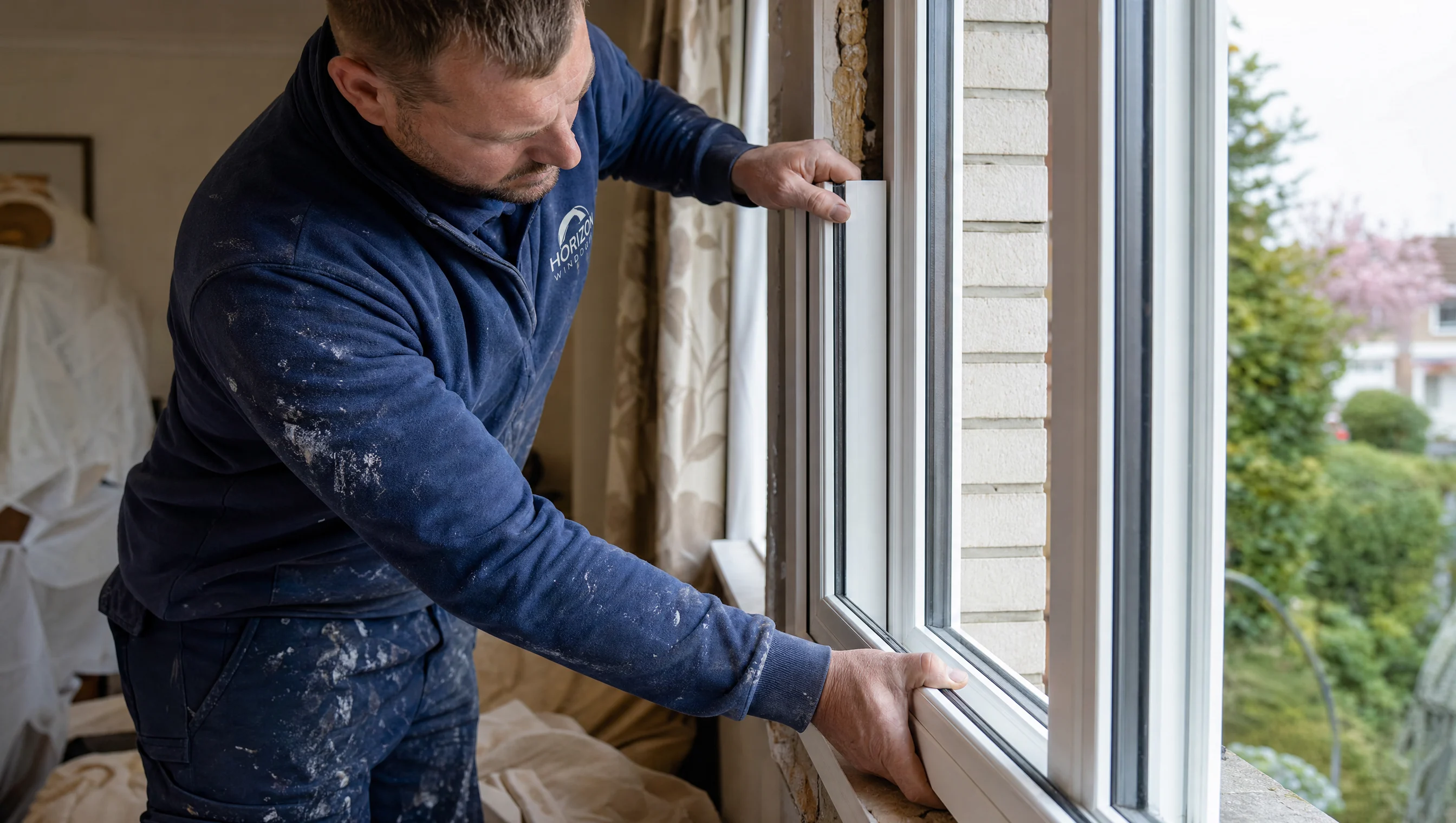
A clean, code-compliant window installation in Quebec takes only 30 to 60 minutes of hands-on work per opening — but it is the preparation before and the finishing after that separate a window that lasts 35 winters from one that drafts within five. Knowing each step lets you ask the right questions and recognize a job done properly.
Step 1 — Site Visit and Measurement
A qualified installer begins with an on-site visit, measuring every rough opening at three points across both the width and the height, since older Montreal masonry openings are rarely perfectly square. They photograph existing trim, brickmould, and interior finishes, then discuss style, glazing, and color so the order matches your home exactly.
This is also when the installer confirms whether you need a full-frame replacement — removing the window down to the structural opening — or a retrofit insert into a sound existing frame. Full-frame is the standard for any window older than 25 years or showing rot and air leakage, because it lets the crew re-insulate the entire rough opening rather than hiding old problems behind new vinyl.
Verify that the company holds a valid RBQ licence before signing anything. In Quebec, the Régie du bâtiment licence is your protection against uninsured work, and it is also a prerequisite for most rebate programs, which will not honour claims tied to an unlicensed contractor.
Step 2 — Manufacturing and Lead Time
Custom UPVC windows are manufactured to your exact dimensions, glazing package, and color — there is no off-the-shelf stock that fits a hundred-year-old triplex. Typical lead time at Unisson is 4 to 6 weeks during the spring and summer peak, and somewhat shorter in the fall and winter shoulder seasons.
Manufacturing locally in Saint-Laurent matters more than it sounds. A short supply chain means faster turnaround, easier warranty service, and units engineered specifically for ENERGY STAR Zone D, the Canadian climate zone that covers Greater Montreal, Laval, and the South Shore. Imported windows are often spec’d for milder zones and underperform in our January cold snaps.
Use the wait productively. This is the right window to start your Rénoclimat file and, if applicable, your Canada Greener Homes paperwork — a reputable installer will help you assemble the pre- and post-work documentation that these programs require for grants of up to $150 per opening and up to $5,000 federally.
Step 3 — Installation Day
On installation day, the crew works one opening at a time so your home is never fully exposed to the elements. A well-run replacement follows a consistent sequence that protects both the building envelope and your interior finishes.
- Protect floors, furniture, and walkways with drop cloths and corner guards
- Remove the old window and carefully clean and inspect the rough opening for rot or water damage
- Verify squareness with a level and shim the new unit plumb, level, and square
- Set the new window and mechanically fasten it to the structural framing, not just the trim
- Insulate the full perimeter with low-expansion foam — high-expansion foam can bow the frame and jam the sash
- Install interior and exterior trim, including brickmould or capping where needed
- Caulk all exterior joints with a quality polyurethane or hybrid sealant rated for freeze-thaw cycles
The Details That Separate a Good Install from a Bad One
The single most common cause of premature window failure in Quebec is not the window itself but how the perimeter was sealed and drained. A correct install leaves a continuous air barrier on the interior side and allows any incidental water to drain out the exterior, never trapping moisture inside the wall where freeze-thaw cycling will do its damage.
Low-expansion foam matters here more than homeowners expect. The wrong foam, applied too generously, exerts enough pressure to bow a vinyl frame out of square, which is why you sometimes see a brand-new window that will not crank shut. Proper shimming at the fastener points carries the load instead, leaving the frame free to operate.
Ask whether the crew back-caulks the exterior trim and leaves the bottom weep path clear. These two small steps — sealing the top and sides while letting the bottom breathe — are what keep wind-driven rain and snowmelt out of the assembly through 30-plus Montreal winters.
Red Flags to Watch for in a Quote
The quote stage is where you can spot a problem install before it happens. A trustworthy estimate spells out the installation method opening by opening, names the specific window line and glazing package, and states the perimeter sealing approach — vague all-in pricing with no scope is the most common warning sign.
Be wary of quotes that are dramatically lower than the rest of the field, of crews that propose an insert into a clearly rotten frame to save time, and of any company unwilling to provide its RBQ licence number, proof of liability insurance, or local references. The cheapest bid often becomes the most expensive once you pay a second time to fix it.
- No RBQ licence number, insurance proof, or local references on request
- All-in pricing with no per-opening scope or named product line
- A retrofit insert proposed for a frame that is rotten or out of square
- No mention of perimeter insulation, flashing, or low-expansion foam
- Pressure to pay a large deposit in cash before any paperwork is signed
Step 4 — Inspection and Warranty
Before leaving, the crew lead inspects every installation, tests that each sash opens, closes, and locks smoothly, and confirms the perimeter is sealed and the trim is clean. Operate each window yourself during this walkthrough — a window that binds or fails to latch on day one will only get worse.
The installer then registers your warranty, which on quality UPVC typically covers the frame and sash for 20-plus years and the insulated glass seal for at least 20 years. Save every document: the invoice, the warranty certificate, and the ENERGY STAR rating sheets are exactly what Rénoclimat and Canada Greener Homes ask for when you file your rebate claim.
If you are planning a replacement and want a fixed-price written quote with the scope spelled out opening by opening, request a free estimation. We will walk you through lead times, rebate eligibility, and the exact installation method for your home.
Frequently Asked Questions
How long does each window take?
Standard installations take 30 to 60 minutes of hands-on work per opening once the crew is set up. Large picture windows, bay and bow units, or openings that need masonry repair take longer, and a full-house project is usually scheduled over one to three days.
Can I stay home during the install?
Yes, and most homeowners do. The crew works one opening at a time and seals each before moving on, so the home is never wide open. Expect some dust during demolition and brief drafts at the active opening, so keep pets contained and clear access to each window.
Do I need to be ready for re-painting?
Modern installs include new interior and exterior trim plus caulking, so most homes need only minor touch-ups. If your old window had plaster returns or an unusual trim profile, plan for some interior paint work around the new casing.
Can windows be installed in winter?
Yes. Professional crews use heaters, work one opening at a time, and choose sealants rated for cold application. That said, spring and fall make caulking and finishing easier, and lead times are often shorter outside the summer peak.
Should I choose full-frame or insert (retrofit) installation?
Full-frame replacement is the standard for older or failing windows because it lets the crew re-insulate and re-flash the entire rough opening. A retrofit insert is only appropriate when the existing frame is structurally sound, square, and free of rot — otherwise you are sealing new vinyl over an old problem.
Does the installer need to be RBQ licensed for me to get rebates?
In practice, yes. Quebec rebate programs and most warranties expect work done by a licensed, insured contractor, and an RBQ licence is your assurance the company is accountable. Always confirm the licence number before signing a contract or deposit.