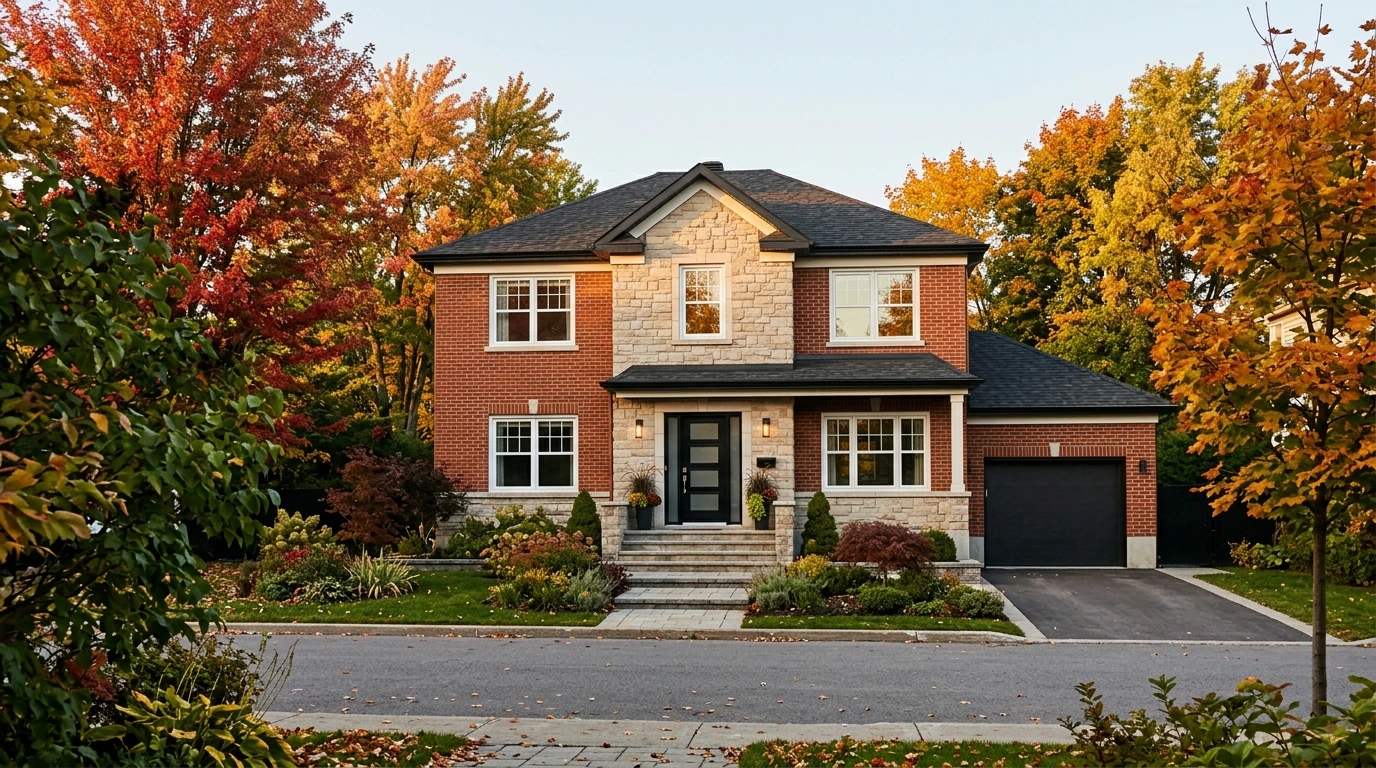
Choosing windows and doors on the South Shore of Montreal means dealing with a housing stock that is different from the island. Longueuil, Brossard, Saint-Lambert, Boucherville and their neighbours combine post-war bungalows, split-levels from the sixties and seventies, older village cores and new townhouses, often exposed to wind from the river or noise from busy highways. This guide looks at what those homes have in common, what changes from town to town and how to plan a replacement project in the right order.
What Makes the South Shore Different for Windows and Doors
Many South Shore houses were built between the 1950s and the 1990s, when the suburbs grew quickly across the river. Many still have their first or second generation of windows: aluminum or early vinyl sliders, wood casements that have been painted many times and patio doors whose seals have long since failed. These homes were not designed for today's expectations of comfort, so a well-planned replacement can make a noticeable difference.
Location adds its own conditions. Homes near the St. Lawrence can be exposed to strong winds that push cold air through any weak joint, while neighbourhoods along Route 132, Highways 10, 20 and 30 or near the Saint-Hubert airport may deal with steady traffic or aircraft noise. Inland streets are often more sheltered but get full sun on large south- and west-facing windows in summer.
The best approach is to look at each house as a whole rather than window by window. Orientation, the main sources of noise, the rooms that are hard to heat and the doors used every day all point to where the priorities should be.
Town by Town: Longueuil, Brossard, Saint-Lambert and Boucherville
Each South Shore town has its own mix of buildings, and that mix shapes the most common projects. The descriptions below are general tendencies, not rules, since every street includes exceptions. They are a useful starting point to understand which windows and doors are likely in your home and what usually needs attention.
- Longueuil: from the older streets of Vieux-Longueuil to the bungalows of Saint-Hubert and Greenfield Park, with many sliders and basement windows to upgrade.
- Brossard: split-levels and cottages from the sixties to the eighties, plus newer condos and townhouses where syndicate rules often apply.
- Saint-Lambert: older homes with character on tree-lined streets, where proportions, grilles and colours deserve special care.
- Boucherville: the heritage core of Vieux-Boucherville next to large suburban neighbourhoods, many of them close to the river and its winds.
- Nearby towns: La Prairie, Candiac, Saint-Bruno-de-Montarville and Sainte-Julie share much of the same suburban housing and the same questions.
Bungalows and Split-Levels: Common Window Upgrades
Bungalows and split-levels are the backbone of the South Shore. Their large living-room windows, often a fixed panel flanked by sliders, are a good candidate for a picture window combined with casement or awning sections that open and seal better. In bedrooms, replacing a worn slider with a casement can improve both airtightness and ventilation, since the whole sash swings open to catch the breeze.
Basement windows deserve attention in split-levels, where the lower level is often a family room or a bedroom. These small windows sit close to the ground, collect snow and moisture and are often among the coldest openings in the house. A good replacement takes into account the window well, drainage and, for any bedroom, the need for a window that can be used as an emergency exit, which is something to confirm with your city.
Patio doors are the other big item. Many original sliding doors from this era have heavy frames, failed glass seals and rollers that no longer glide, and they are often a major source of drafts in the kitchen or dining room.
Noise and Wind Near Bridges, Highways and the River
If your home faces a bridge approach, a highway or a busy boulevard, sound control should be part of the plan from the start. The biggest gains usually come from a tight installation and good seals, because sound travels through gaps just like air. Beyond that, glass made with panes of different thicknesses, laminated glass or a triple-glazed unit can reduce traffic and aircraft noise further on the most exposed side of the house.
Along the river, wind is the main challenge. Strong gusts test every joint between the frame and the wall, so the quality of the installation matters as much as the window itself. Casement and awning windows, which press the sash against the weatherstripping when locked, tend to resist wind-driven air and rain better than older sliders.
It is rarely necessary to treat every window the same way. Many homeowners choose a higher level of glazing for the exposed facade and standard high-performance glass elsewhere, which keeps the project focused where it counts.
- Identify the noisiest and windiest side of the house before choosing glass.
- Ask about laminated or triple glazing only for the rooms that need it.
- Favour casement or awning windows on facades exposed to the river wind.
- Check that the gap around each frame is insulated and sealed, not just caulked.
Patio Doors and Entry Doors for South Shore Homes
Many South Shore houses have a backyard, and the patio door is used much more than people expect, from summer barbecues to letting the dog out on a January morning. A modern sliding or hinged patio door with insulated glass, multipoint locking and a well-designed sill can make a cold dining area much more comfortable. Think about the deck or patio height, the snow that piles up against the door and the space available for a door that swings.
Entry doors on bungalows and split-levels are often original steel doors with worn weatherstripping and small glass inserts. Replacing them is a chance to add sidelites or a larger glass panel to bring daylight into the entrance, while choosing a style that suits the brick or siding of the house. Garage-to-house doors also deserve a look, since a poorly sealed one can let cold air and garage fumes into the home.
Permits, Condo Rules and Older Sectors
Each South Shore municipality has its own regulations, and Longueuil also works by borough, so the rules that apply on one street may differ from the next town over. Replacing windows of the same size and style is often simple, but changing the size of an opening, the style of the windows or the look of the facade may require a permit or an approval. Older sectors such as Vieux-Longueuil, Vieux-Boucherville and parts of Saint-Lambert can have additional requirements.
In condos and townhouses, the declaration of co-ownership usually governs windows and doors, including colours, styles and who is responsible for the work. Check with the syndicate before ordering anything. The safest habit is simple: ask your city or borough and your syndicate before the project starts, not after.
- Whether a permit is needed for your type of work
- Requirements for heritage or older sectors
- Syndicate rules on colour, style and grilles
- Emergency exit requirements for bedroom windows, including basements
- Any change to the size of an opening in a masonry or brick wall
Planning Windows and Doors on the South Shore: Free Estimate
A walk around your own house, facade by facade, usually shows where to start: the side exposed to wind or noise, the rooms that are hard to heat, the patio door that no longer glides, the basement windows that collect frost. When you see failed seals, soft frames or drafts that new weatherstripping has not fixed, it is a good time to involve a professional, especially if permits or syndicate approvals may be needed. The scope and price of a project depend on the number of openings, the types of windows and doors, the glass options and the condition of the existing frames, so no two houses are alike, and an on-site visit also helps decide whether to do everything at once or in phases.
Unisson Groupe manufactures and installs windows and doors and serves homeowners across the South Shore, from Longueuil and Brossard to Saint-Lambert, Boucherville and nearby towns. When you are ready, you can request a free in-home estimate to review your windows and doors and discuss the options that fit your home.
Frequently Asked Questions
Do I need a permit to replace windows on the South Shore?
It depends on the municipality, the borough in Longueuil and the type of work. Replacing windows of the same size and style is often simpler than changing an opening or the look of the facade. Check with your city or borough before starting, and with your syndicate if you own a condo or townhouse.
Which windows work best for a South Shore bungalow?
Many bungalow owners combine a picture window in the living room with casement or awning sections that open and seal well. Casements are a good replacement for old sliders in bedrooms. The right mix depends on orientation, exposure to wind and how each room is used.
How can I reduce highway or airport noise through my windows?
Start with a tight installation and good seals, since sound passes through gaps. On the most exposed side, laminated glass, panes of different thicknesses or triple glazing can reduce noise further. Focus on the rooms where noise bothers you most.
Should I replace all my windows at once or in phases?
Both approaches work. Doing everything at once keeps the look consistent and limits disruption, while working in phases lets you start with the coldest or noisiest facade. An on-site assessment helps set the order.
How much does it cost to replace windows and doors on the South Shore?
It depends on the number and size of openings, the types of windows and doors and the glass options chosen. The most reliable answer comes from a free in-home estimate based on your house.