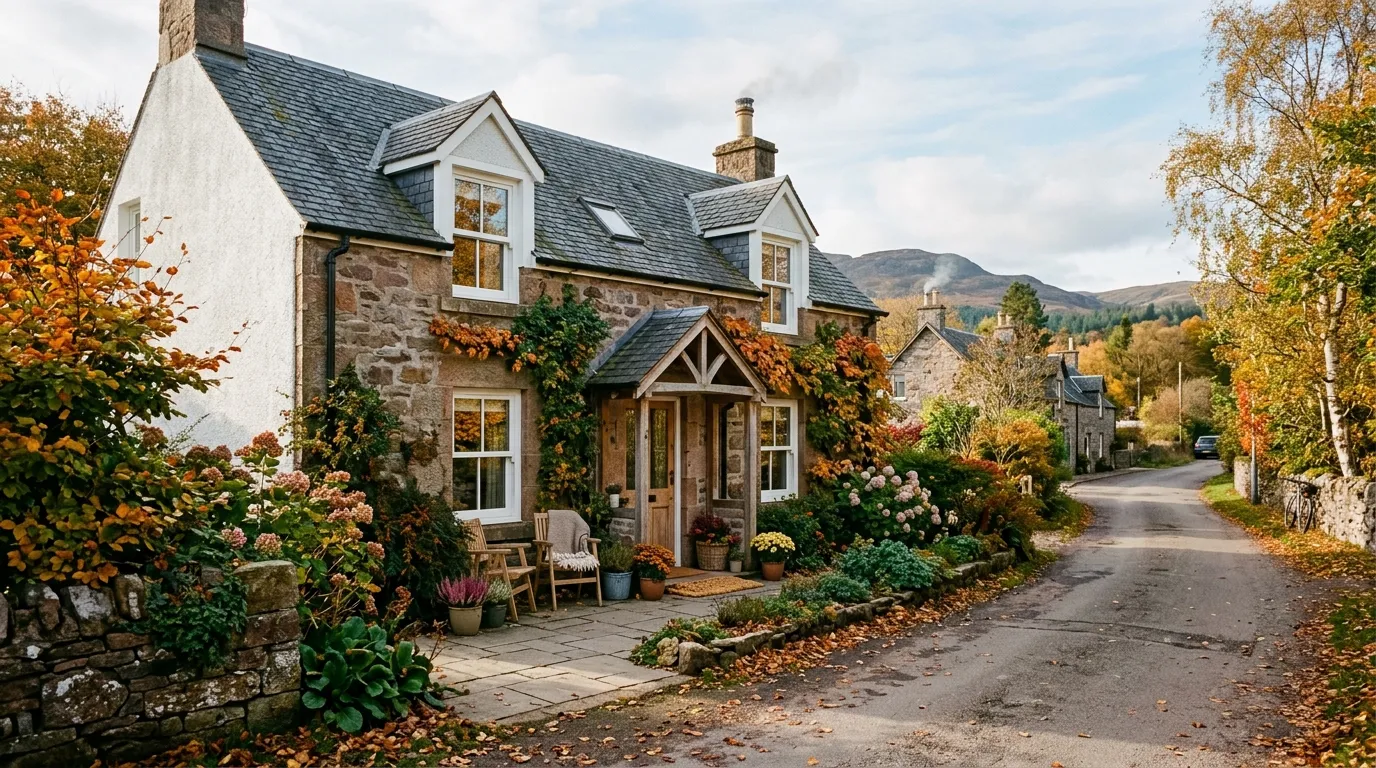
Maxville is a village of roughly 750 people in North Glengarry, best known for hosting the Glengarry Highland Games every August since 1948, when the population swells by tens of thousands for a weekend of pipe bands and heavy events. The other fifty-one weeks, it is a quiet main street of brick and clapboard homes surrounded by open dairy country where the winter wind has nothing to slow it down. Unisson Groupe now measures, manufactures and installs windows and doors here, direct from our factory in Saint-Laurent.
Why Unisson now serves Maxville
Maxville sits a few kilometres south of Highway 417 in the Township of North Glengarry, about 135 km from our Saint-Laurent factory, roughly an hour and a half by the 40 and the 417. The story goes that the village earned its name from the sheer number of Scottish Mac-families who settled it, and that Highland heritage is still visible on Main Street, at the fairgrounds and at the Glengarry Highland Games, the largest of their kind outside Scotland. It is exactly the kind of community our Eastern Ontario expansion was designed for: close enough to serve with our own people, far enough from the big-city dealers that homeowners have had few factory-direct options.
Factory-direct manufacturer means Unisson designs and builds the windows in our own plant, our own estimator measures your openings, and our own crew installs them. There is no dealer margin in the price and no split responsibility if something goes wrong: the company that made the window is the company that put it in, licensed under RBQ 5670-0248 and working to the Ontario Building Code on this side of the line.
Glengarry is bilingual country, and so are we. Estimates, contracts and installation-day conversations happen in English or French, whichever you prefer, without a translator or a phone call to head office.
Homes in Maxville: village lots and concession farms
The core of the village dates from the railway era of the 1880s to the 1920s: two-storey brick and frame houses on Main, Mechanic and Catherine streets with tall, narrow windows and deep sills. Around them are the bungalows and side-splits of the 1950s to 1970s, some 1990s and 2000s infill toward the edge of the village, and the farmhouses and hobby farms on the concession roads that use Maxville as their post office. Each of these has a different window problem, and we have seen all of them within a few blocks of each other.
In the century homes, the trouble is usually original wood sash with rope-and-weight counterbalances long since cut, storm windows that no longer seal, and rot at the sill where a hundred winters of snowmelt have soaked the end grain. In the mid-century bungalows, it is aluminum sliders and single-pane picture windows that sweat and frost in January. In the 1990s builds, the sealed units are now at the age where the desiccant is spent and fog appears between the panes on a cold morning.
Then there is the weather. Maxville is surrounded by flat farmland, and a north-west wind off those fields in February can drop the felt temperature well below the -30 °C already on the thermometer. Summers are humid, spring brings weeks of freeze-thaw, and a window frame here moves more between seasons than one in a sheltered city street. Fusion-welded corners, compression seals and a warm-edge spacer are not upgrades in Maxville; they are the minimum.
- 1880s–1920s village homes: tall wood sash, cut counterweights, storm windows, sill rot
- 1950s–70s bungalows: aluminum sliders, single-pane picture windows, interior frost
- 1990s–2000s builds: first vinyl generation, fogged sealed units, tired hardware
- Farmhouses: exposed on every side, drafts at the frame perimeter, ice dams above dormers
Which windows and doors fit here
For the tall openings of a Victorian-era village home, we usually propose UPVC casement windows sized to the original opening, sometimes with a transom or a fixed section above to keep the proportions right. On a heritage brick facade, our hybrid windows add an aluminum-clad exterior in a painted colour, so the street side keeps a traditional look without the maintenance of wood. For bungalows and farmhouses, casement and awning combinations replace old sliders with a tighter seal and a better view.
We recommend triple glazing almost without exception in Maxville. The third pane and the second low-E coating keep the interior glass surface warmer, which is what stops frost from forming in the corners on the coldest nights and keeps the room comfortable when you sit near a window. Every unit is ENERGY STAR certified to Canada's single national specification in force since 2020: a U-factor of 1.22 W/m²·K or lower, or an Energy Rating of 34 or higher.
On the door side, a village home often has a front door that faces the street and a back door that faces the wind. Our insulated steel and fibreglass entry doors handle both, with adjustable thresholds and multi-point locks, and our patio doors use the same triple low-E glazing as the windows for the deck side of a bungalow.
- UPVC casement: tall openings, transoms, compression seals, multi-point locks
- Hybrid UPVC-aluminum: painted exterior for heritage brick on Main Street
- Triple glazing: two low-E coatings, argon fill, warm-edge spacer
- Entry & patio doors: insulated cores, adjustable thresholds, ENERGY STAR glazing
Ontario specifics: code, permits and rebates
Every Ontario installation follows the Ontario Building Code, whose 2024 edition has applied since early 2025. For a replacement in an existing opening, the code's energy requirements mostly concern new construction, and an ENERGY STAR triple-glazed unit exceeds what the code asks of a new home in this climate. The rule that most often affects a real project is egress: a basement bedroom window must keep the required clear opening after replacement, and we check that at the measurement visit.
Permits are decided municipally. A same-size replacement in the same opening generally does not need a building permit in Ontario, but enlarging an opening, cutting a new one in a load-bearing wall or changing a basement egress window usually does. For Maxville, a quick call to the North Glengarry building department before the work is the safest approach, and we can supply drawings if the township asks for them.
The main Ontario rebate open at the time of writing is the Home Renovation Savings Program, run by Save on Energy and Enbridge Gas with provincial support. It has offered a fixed amount per ENERGY STAR window or door opening, provided you complete a home energy assessment and at least two eligible measures together, such as windows plus insulation or air sealing. Many Maxville-area homes heat with propane, oil, electricity or wood rather than natural gas, and the program has run a stream for those homes as well. Amounts, conditions and deadlines change, so confirm with the program before you rely on a rebate in your budget.
How it works from our Montreal factory
The first step is a free in-home estimate. Our estimator drives out from Saint-Laurent, measures each opening, checks frames, sills and any rot, and goes through frame types, glazing and colour options with you. You get a written quote by email, in English or French, with no obligation to proceed.
After approval, your windows and doors go into production at our own Saint-Laurent factory. Lead time is typically 6 to 10 weeks depending on the season and the size of the order. Delivery and installation are handled by our own crews, usually in one or two days for a typical house: old units out, openings insulated and foamed, new units levelled and secured, exterior capped or trimmed and interior finished before we leave.
One company, one warranty: because we manufacture and install, the written warranty covers both the product and the workmanship, with the frame, the sealed glass unit and the hardware listed separately. Financing is available online with payments spread over 12 to 240 months, so a whole-house project in a century home does not have to wait for several summers.
- Step 1: free in-home measurement and written quote
- Step 2: manufacturing at our Saint-Laurent factory, typically 6–10 weeks
- Step 3: delivery and installation by our own crews, usually 1–2 days
- Step 4: one warranty for product and installation, financing over 12–240 months
Frequently Asked Questions
Can you match the tall windows of a century home on Main Street?
Yes. We build to the measured opening, and for tall Victorian-era proportions we often combine a casement with a fixed or transom section so the window keeps its original look while sealing like a modern unit.
Does Unisson work in English in Maxville?
Of course. Our estimators and crews are bilingual, and everything from the quote to the installation-day walkthrough can be in English or French.
Should we avoid Highland Games weekend for installation?
It is a good idea. Traffic and parking in the village are heavy on the first weekend of August, so we simply schedule around it; the rest of the summer is wide open.
Do I need a permit in North Glengarry to replace windows?
For a like-for-like replacement, usually not; for a larger opening or a basement egress change, usually yes. Confirm with the North Glengarry building department, and we can provide drawings if needed.
What is the lead time from Montreal?
Roughly 6 to 10 weeks of production, then one or two days on site for a typical home. Maxville is about an hour and a half from our factory, so delivery and installation happen on the same trip.