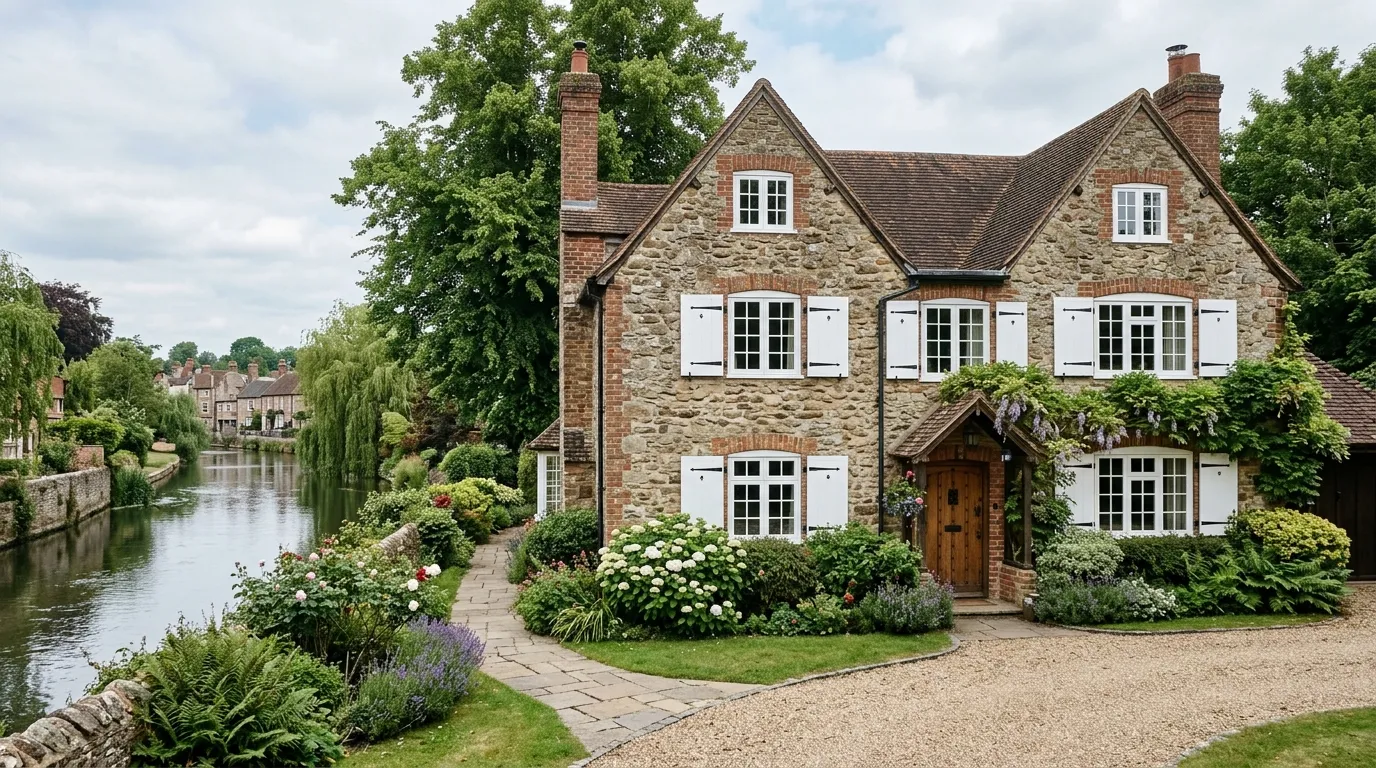
L'Orignal has been a river town since before there was an Ontario: the seigneury granted here in 1674 was the first in what is now the province, and the courthouse on the hill has been in use since the 1820s. Unisson Groupe now brings factory-direct windows and doors to this village on the Ottawa River — measured in your home, built in our Saint-Laurent plant, installed by our own bilingual crews. Here is how that fits a century home, a riverside bungalow or anything in between.
Why Unisson now serves L'Orignal
L'Orignal is a village of roughly 1,400 people on the south shore of the Ottawa River, a few minutes west of Hawkesbury and the seat of the United Counties of Prescott and Russell. It is old by Ontario standards: the seigneury of Pointe-à-l'Orignal dates from 1674, the American settler Nathaniel Treadwell built mills here after buying it in the 1790s, and the district courthouse — widely described as the oldest still operating in the province — went up in 1825. Since 1998 the village has been part of Champlain Township along with Vankleek Hill, Longueuil and West Hawkesbury, but it keeps its own quiet, river-facing character.
Homes here have traditionally been served by dealers from Hawkesbury or Ottawa reselling windows built somewhere else. Unisson Groupe works differently: we are the manufacturer. Our factory in Saint-Laurent is about 120 kilometres away — an hour and twenty minutes by the 40 and the 417 — and we now schedule measurement visits and installations along the whole Ottawa River corridor between Hawkesbury and eastern Ottawa. The person who measures your openings, the plant that builds the units and the crew that installs them all belong to the same company, which is what factory-direct means for you as a buyer: one price without a distributor's margin, one point of contact, and one warranty conversation.
L'Orignal is majority francophone, as is most of Prescott-Russell, and our crews and office are fully bilingual. You can run the entire project in French, in English, or in whichever mix your household naturally uses — quotes, contracts and warranty documents included.
- Manufacturer, not dealer: we build what we install, at our own plant
- RBQ licence 5670-0248, ENERGY STAR certified UPVC and hybrid windows
- Bilingual crews and paperwork, French or English
Homes in L'Orignal: century houses and river humidity
The village core around the courthouse and the old main street holds a real concentration of century homes — stone, brick and wood-frame houses from the 1800s and early 1900s, several of them with the tall, narrow window proportions and deep reveals of their era. Some of these properties carry heritage designations or sit in areas the township treats with extra care; if yours does, check with Champlain Township before changing the look of your street-facing windows, and tell our estimator so we can propose profiles and grilles that respect it. Away from the core, L'Orignal grew in the post-war decades: bungalows and split-levels from the 1960s to 1980s, plus newer homes on larger lots toward the river and the county road.
Old and new fail differently. In the century homes, wood sashes have been repaired and repainted so many times that they no longer seal, storm windows have gone missing, and frames have moved with the foundation. In the post-war homes, the failure is the glass itself: early sealed units have lost their argon or their seal entirely, so the panes fog from the inside, and aluminum or first-generation vinyl frames conduct cold straight into the room. Original entry doors in both categories tend to have worn thresholds and a strike plate that no longer pulls the door tight.
The river is the other factor. L'Orignal sits where the Ottawa widens, and that water keeps the air noticeably more humid than a few kilometres inland — you see it as morning fog in spring and fall, and as condensation on any glass that is colder than the room in winter. Combine that with −30 °C cold snaps, wind coming straight across the water and the freeze-thaw cycles of March and April, and a window that is merely adequate elsewhere will show its weaknesses here.
Products that fit L'Orignal homes
For the century homes, our UPVC and hybrid windows can be built in the tall proportions the original openings demand, with the frame profiles kept slim so the glass area stays generous. Exterior grilles or simulated divided lites reproduce the look of the original divided sashes, and a range of exterior colours — heritage cream, deep green, black, dark brown — lets the new windows read as part of the house rather than as an obvious replacement. Hybrid units, with aluminum cladding outside and UPVC inside, are our recommendation where a dark colour will face the afternoon sun.
For anything facing the river, triple glazing with Low-E coatings and argon fill is worth the modest premium. The interior pane stays several degrees warmer than in a double-glazed unit, which is exactly what prevents the condensation that river humidity produces on cold glass. All of our standard windows meet the single national ENERGY STAR specification in force across Canada since 2020 — a U-factor of 1.22 W/m²·K or lower, or an Energy Rating of 34 or higher — and our triple-glazed configurations clear it with room to spare.
Casement windows seal best against wind off the water and suit the tall openings of the older houses; awning windows work well over a kitchen sink or in a bathroom, where you want ventilation even in rain. For the post-war homes, a horizontal slider or single-hung in UPVC keeps the original look while fixing the thermal problem. On the door side, an insulated steel or fibreglass entry door with a multi-point lock, and a sliding or garden patio door onto a deck with a river view, round out most projects. The full line is on our windows page.
- Tall-proportion UPVC or hybrid windows with heritage grilles and colours for century homes
- Triple glazing, Low-E and argon on river-facing elevations
- Casement and awning for wind and rain; sliders and single-hung for post-war homes
- Insulated entry doors and sliding or garden patio doors
Ontario rules: building code, rebates and permits
Because L'Orignal is in Ontario, the Ontario Building Code applies, not Quebec's. For a replacement in the existing rough opening with no change to size or structure, a building permit is generally not required, though Champlain Township's building department is the authority and a quick call to confirm is always worthwhile. Enlarging or adding an opening, or altering a bedroom window in a way that affects egress, normally does require a permit. Separately from the building permit, a designated heritage property may need a heritage approval for visible changes; we will raise this at the estimate if your house is likely to be affected.
Rebates are a moving target in Ontario and we deliberately hedge here. At the time of writing, the main provincial program is the Home Renovation Savings Program, delivered by Enbridge Gas and Save on Energy with support from the Ontario government. It has provided a fixed rebate per ENERGY STAR certified window or door opening, conditional on a home energy assessment and on completing at least two categories of upgrade in the same project — windows on their own have generally not qualified. Eligibility has not been limited to natural gas customers, which matters in a village where many homes heat with oil, propane or electricity, but confirm the current terms and deadlines with the program before you budget around them.
Older federal programs such as the Canada Greener Homes Grant have closed to new applicants. If a salesperson promises you a rebate, ask which program, and check it yourself; our estimators will give you a straight answer about what is open the week we visit.
How it works from Montréal: measurement to installation
Everything begins with a free in-home estimate. Our technician comes to L'Orignal, measures every opening to the millimetre, inspects sills, frames and any signs of water damage, and discusses styles, colours, glazing and grilles with you. You get a written, itemized quote — no obligation, and no pressure to sign on the spot. For a century home we usually take extra time on the reveals and trim so the new units can be installed without destroying original interior woodwork.
After you approve the quote, production starts at our Saint-Laurent factory. Lead time is typically four to six weeks in peak season and often less in winter. Installation is done by our own employees, not subcontractors: the crew arrives from Montréal with your units, removes the old windows one at a time, prepares and flashes each opening, sets and shims the new frame, insulates, seals and finishes inside and out. Most houses are completed in one to two days, and the home is never left open to the weather overnight.
You receive the manufacturer's warranty on the products and our own warranty on the installation, both written into the contract. Financing through our partner Financeit runs from 12 to 240 months, with weekly, bi-weekly or monthly payments. And because we are the manufacturer, any service question afterward is a single phone call to the company that built and installed your windows.
- Step 1: free measurement visit and itemized written quote
- Step 2: production at our Saint-Laurent factory, typically 4–6 weeks in peak season
- Step 3: installation by our own crews, usually 1–2 days, one opening at a time
- Step 4: written warranties, financing from 12 to 240 months, one contact for service
Frequently Asked Questions
My house in L'Orignal is over a hundred years old. Can you match the original windows?
We can match proportions, grille patterns and exterior colours closely with UPVC or hybrid windows, and keep interior trim intact during installation. If the property is heritage-designated, we recommend confirming the township's expectations before ordering, and we will adapt the design accordingly.
Why do my river-facing windows sweat so much in winter?
Humid air off the Ottawa River meets glass that is colder than the room, and the moisture condenses. Triple glazing with Low-E and argon keeps the interior pane warmer, which is the most reliable fix; better ventilation helps as well.
Do I need a building permit from Champlain Township?
For a like-for-like replacement in the same opening, usually not. Changing the size of an opening, adding one, or altering a bedroom egress window generally does require a permit. Heritage properties may need a separate approval. We flag all of this during the estimate.
Do you install in winter in L'Orignal?
Yes. Our crews replace one opening at a time and seal it before moving on, so the house stays warm. Winter often means shorter production lead times as well.
Can we do everything in French?
Absolutely. Estimators, office staff and installers are bilingual, and every document can be issued in French or English.