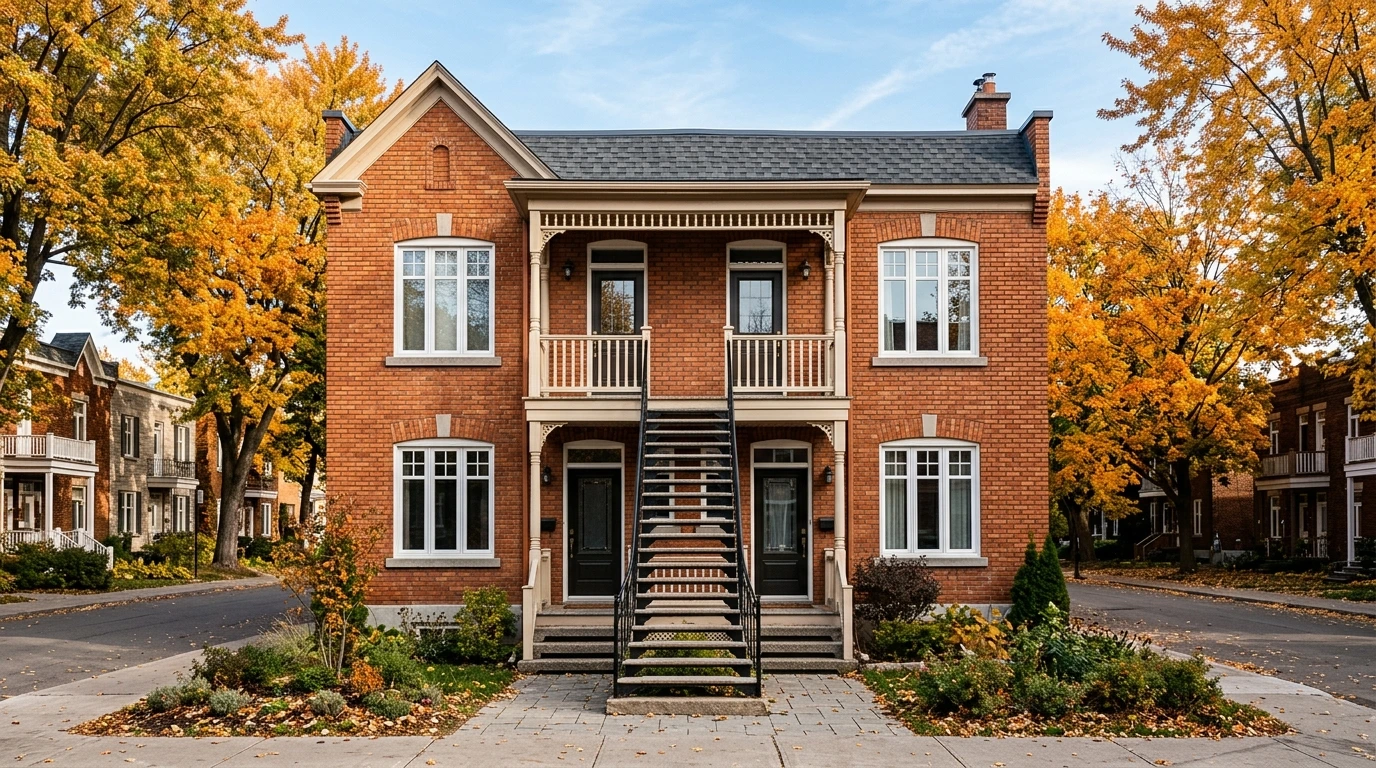
Window replacement in Montreal is not quite the same project as it is in a suburb or a newer city. The housing stock here ranges from century-old greystones and brick plexes to post-war bungalows and recent condo buildings, and each one brings its own constraints. This guide walks you through the whole process: how your type of home shapes the job, the signs that it is time to replace, how a typical project unfolds from first visit to final caulking, and how to choose windows suited to Montreal winters.
How Your Type of Montreal Home Shapes the Project
Before you look at brochures, look at your building. A plex in Rosemont, Villeray or the Plateau usually has tall, narrow openings in a brick or stone facade, often with wood or old aluminum windows and sometimes interior storm sashes. These openings are rarely perfectly square after a century of settling, so careful measuring and shimming matter more than in a newer house.
Bungalows and split-levels in areas like Saint-Léonard, Anjou, Ahuntsic or Pierrefonds tend to have larger living room windows, basement windows at grade and aluminum or early vinyl units from the original construction. Here the main questions are usually comfort, condensation and the look of the facade. Condo owners, on the other hand, often share responsibility for windows with the syndicate and must follow the building's rules on style, colour and the choice of contractor.
Knowing which category you fall into helps you ask the right questions from the start: what the wall is made of, whether the frame can stay or must come out, and who needs to approve the work.
- Plexes and row houses: tall openings, masonry walls, often several units and several owners or tenants to coordinate.
- Greystones and heritage facades: proportions, divided-lite patterns and colour can matter as much as performance.
- Bungalows and split-levels: large picture windows, basement openings and siding or brick veneer.
- Condos: the syndicate's rules and the declaration of co-ownership come before any product choice.
Signs It Is Time to Replace Your Windows
Windows rarely fail all at once. They decline slowly, and a few clear signs tell you when repairs are no longer worth it. Frost or water forming between the panes means the sealed unit has failed. Drafts you can feel with your hand on a windy day, sashes that no longer lock tightly and frames that are soft, cracked or warped all point to a window near the end of its life.
Heavy condensation on the inside of the glass is a more complex sign. It can come from high indoor humidity rather than from the window itself, but old single glazing or aluminum frames make it much worse because their inner surfaces get very cold. If you wipe water off the same windows every winter morning and see stains or mould on the sills, the window is part of the problem.
Comfort and noise also count. Many Montreal homeowners decide to replace because the living room is cold near the glass, because street or traffic noise is tiring, or because old windows are hard to open and clean. These are valid reasons, even when the window has not technically failed.
How a Window Replacement Project in Montreal Unfolds
A well-run project follows a clear sequence. It starts with an in-home visit where each opening is measured and inspected: the condition of the frame and sill, the type of wall, the interior finish and any signs of water damage. This is also when you talk about style, opening type and glass options for each room.
Next comes the choice of installation method. In an insert replacement the existing frame stays in place and the new window fits inside it, while a full-frame replacement removes everything down to the rough opening. The right choice depends on the condition of the old frame and on what you want to fix, and you can read more about it on our page on window installation.
Windows are then manufactured to the measurements taken. On installation day, the crew removes the old unit, prepares the opening, installs and levels the new window, insulates the gap around it, seals the exterior and finishes the trim inside and out. A final walk-through is the time to open and close every sash with the installer and ask any questions.
- In-home visit, measurements and inspection of every opening
- Choice of style, glass and installation method for each window
- Approval from the city, borough or syndicate if required
- Manufacturing to measure
- Removal, installation, insulation and sealing
- Interior and exterior finishing, then a walk-through
Choosing Windows for Montreal Winters
The frame material is the first big decision. PVC windows are a common choice in Quebec because the frame material insulates well, needs little upkeep and is available in many colours and styles. Hybrid and aluminum-clad options suit homeowners who want a slimmer or more contemporary exterior look.
Glass is where most of the energy performance comes from. Double glazing with a Low-E coating and argon gas is a solid standard for most homes, while triple glazing can make sense on north-facing walls, in bedrooms facing a busy street or anywhere comfort near the glass is a priority. Warm-edge spacers help keep the edge of the glass warmer, which can reduce condensation along the bottom of the pane.
Finally, think about how each window opens. Casement and awning windows close by pressing the sash against the weatherstripping, which usually gives a tight seal and makes them popular for bedrooms and kitchens. Sliding and hung windows work well where a sash cannot swing outward, such as over a balcony or a walkway. Mixing opening types with fixed panels is a common way to combine light, airflow and comfort.
- Frame: PVC, hybrid or aluminum-clad, chosen for your wall and style.
- Glass: double or triple glazing, Low-E coating, argon, warm-edge spacer.
- Opening type: casement, awning, slider, hung or fixed, room by room.
- Certification: look for products rated for a cold climate, such as ENERGY STAR for your zone.
- Look: colour, grilles and proportions that suit the facade.
Permits, Condos and Heritage Sectors
Montreal is divided into boroughs, and each one can have its own requirements for exterior work. In some areas, replacing windows with a similar model may involve few formalities, while in others, especially in heritage or architecturally significant sectors, the borough may look closely at materials, colours and the pattern of the windows on the facade.
Rules change and vary from one street to the next, so the safest approach is to call your borough or check its website before signing a contract. If you live in a condo, read the declaration of co-ownership and contact the syndicate: windows are often common or limited-common portions, and the syndicate may have to approve the model or even manage the work itself. When in doubt, ask a professional to help you prepare the request.
Timing and Preparing Your Home
Windows can be installed in most seasons in Montreal. Spring and fall are popular because the temperature is mild, but a professional crew can also work in winter by replacing one opening at a time so the house is not left open for long. What matters most is planning: the earlier you start, the easier it is to get the visit, measurements and approvals done without rushing.
Before installation day, clear a space of about a metre around each window, take down curtains, blinds and anything hanging on the walls nearby, and protect fragile furniture. Tell your tenants or neighbours if you live in a plex, and think about access for the crew, such as parking, the back lane or a shared staircase.
- Clear the area around each window inside and out
- Remove window coverings, hardware and wall decorations
- Plan access, parking and pets for installation day
- Inform tenants or neighbours in a shared building
Getting Started With a Free Estimate
If you recognize several of the signs described above, such as fogged glass, soft frames, steady drafts or condensation that returns every winter, it makes sense to have your windows looked at by someone who can see them in person. The same goes if you are planning a facade renovation or buying a plex and want to know what the windows will need. The cost of a window replacement depends on the number and size of the openings, the products you choose, the installation method and the condition of the walls, so an on-site visit is the most reliable way to understand your options.
Unisson Groupe manufactures and installs windows and doors and serves homeowners across Greater Montreal, from its base in Saint-Laurent. You can browse our window styles and our page on windows and doors in Montreal, then request a free in-home estimate when you are ready to talk about your project. Bringing your list of problem windows and any borough or syndicate requirements to that visit makes the conversation more useful.
Frequently Asked Questions
How do I know if my windows need replacing or just repairs?
Repairs make sense when the problem is limited to hardware, weatherstripping or caulking. If the sealed glass has failed, the frame is rotten or warped, or several windows leak air and condense heavily, replacement is usually the better long-term choice.
Can windows be replaced in winter in Montreal?
Yes. Installers usually work one opening at a time, so each window is open only briefly and the rest of the house stays heated. It is worth asking which sealants will be used outside, since some products are made to be applied in cold weather.
Do I need a permit to replace windows in Montreal?
It depends on your borough and on the type of work. Some boroughs ask for a declaration or permit, and heritage sectors can have stricter requirements. Check with your borough before you sign, and with your syndicate if you live in a condo.
What type of window is best for a Montreal plex?
There is no single answer, but many plex owners choose PVC windows with double or triple glazing, and casement or hung styles depending on the room. The proportions of the facade and any borough rules also guide the choice.
How much does window replacement cost in Montreal?
It depends on the project: the number and size of the windows, the frame and glass options, the installation method and the condition of the openings. The most reliable way to know is to request a free estimate.