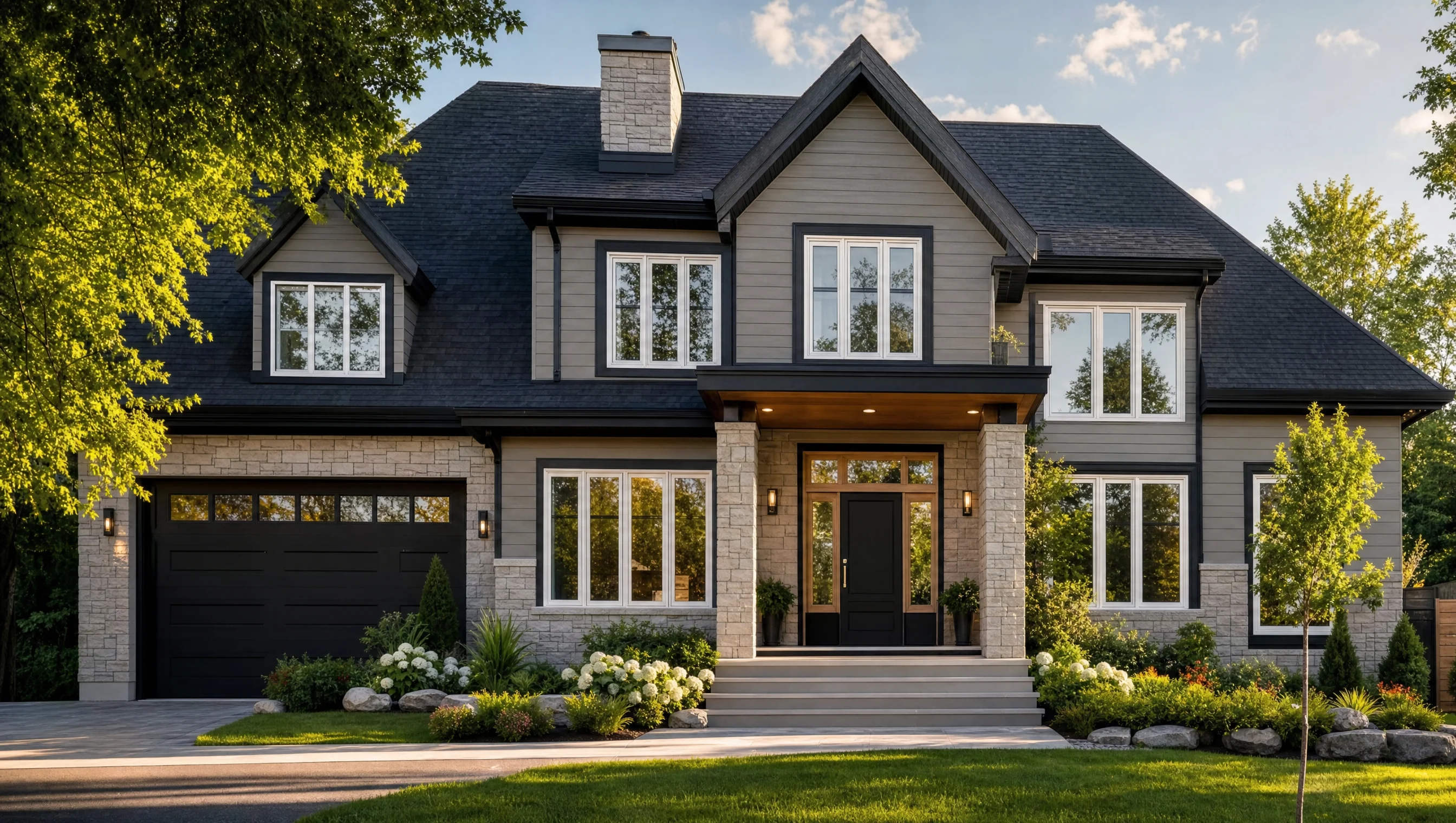
UPVC and aluminum windows look different but behave very differently in Quebec winters. Here is how the two materials compare on cost, energy, and longevity — and why the answer changes depending on whether you are renovating a duplex in the Plateau or specifying glass for a commercial tower in Saint-Laurent. Get the material choice right and you set the comfort and heating bill of your home for the next three decades.
Thermal Performance: The Decisive Factor
The single most important difference between these two materials is how they handle heat. UPVC (vinyl) is a natural thermal insulator, while aluminum is a metal and therefore an excellent thermal conductor. In a province where January averages hover near −10°C and overnight lows reach −25°C, that distinction is felt directly: an uninsulated aluminum frame transfers cold straight through to the indoor surface, feeling icy to the touch and bleeding heat out of the room.
UPVC frames use hollow, multi-chamber profiles that trap pockets of still air, slowing heat transfer the same way a double-pane glass unit does. A quality vinyl frame can post a U-factor (USI) of 1.40 W/m²·K or lower, comfortably meeting the ENERGY STAR Zone D threshold that applies to Greater Montreal, Laval, and the South Shore. A bare aluminum frame, by contrast, struggles to reach those numbers no matter how good the glass is, because the frame itself becomes the weak link.
There is also a comfort dimension beyond the energy bill. A cold frame surface invites condensation, which in Quebec winters means moisture beading on the interior edge, dripping onto the sill, and over time encouraging mould and rot in the surrounding wall. UPVC frames stay closer to room temperature, dramatically reducing the condensation that plagues older aluminum installations.
What About Thermal Break Aluminum?
Manufacturers solved part of the aluminum problem with the thermal break: a strip of low-conductivity polymer (usually polyamide or polyurethane) inserted between the inner and outer aluminum frame sections. This barrier interrupts the direct metal path from cold exterior to warm interior, closing a meaningful portion of the performance gap and reducing both heat loss and condensation.
Thermal-break aluminum is a genuine upgrade over standard aluminum, and in a well-engineered system it performs respectably. Still, for residential cold-climate use it does not quite match a good multi-chamber UPVC window on a dollar-for-dollar basis. The polymer break narrows the gap but does not eliminate it, and the upgraded systems carry a notably higher price. For most Quebec homes, you reach better thermal numbers at a lower cost simply by choosing vinyl.
Where thermal-break aluminum earns its place is in applications that demand slim sightlines and structural strength — large architectural glazing, curtain walls, and commercial buildings where the frame must span great spans without bowing. In those cases the aluminum’s rigidity is worth the thermal compromise, and the building envelope is engineered to compensate.
Lifespan and Maintenance
Both materials are long-lived. A properly installed UPVC window typically lasts 30 to 40 years in the Montreal climate, and quality aluminum can match or exceed that. The difference lies in what each demands from you over those decades. UPVC is essentially maintenance-free: it never needs painting, sanding, or sealing, and a wipe with mild soapy water keeps it looking new. The colour is solid through the profile, so scratches do not reveal a different base material.
Aluminum holds its shape impeccably and will not warp, but its painted or anodized finish can chalk, fade, or scratch over time, especially on sun-exposed south and west elevations. Refinishing aluminum is a real job, often requiring professional repainting. Aluminum is also more vulnerable to galvanic corrosion and to surface pitting from road salt and the freeze-thaw spray common on Quebec streets in winter.
Quebec’s freeze-thaw cycle is the real endurance test. The temperature can swing across 0°C dozens of times each winter, expanding and contracting every frame in your home. UPVC handles this gentle flexing without fatigue, while aluminum’s higher rate of thermal expansion can, over many years, stress sealants and finishes at the joints. For a low-fuss residential window that you install and forget, vinyl has the edge.
Cost in 2026
Budget is where the comparison becomes concrete. UPVC delivers strong thermal performance at the lowest entry price, which is why it dominates Quebec residential replacement. Aluminum costs more up front, and the thermal-break versions you would actually want in our climate carry the steepest premium of all. Here is roughly how the materials stack up for an equivalent residential window in 2026.
- UPVC — lowest upfront cost, no painting needed, expect $700 to $1,400 per installed window
- Standard aluminum — higher initial cost, slim profiles for large glass, weaker thermal numbers
- Thermal-break aluminum — typically 30–50% more than equivalent UPVC for comparable energy performance
- Maintenance cost over 30 years — negligible for UPVC, periodic refinishing possible for aluminum
Rebates and Energy Ratings
Rebate eligibility tilts the math further toward UPVC for most homeowners, because the programs reward the energy numbers that vinyl reaches affordably. To qualify for Rénoclimat, your replacement window must be ENERGY STAR certified for Climate Zone D, and the program pays up to $150 per rough opening when you replace older single- or double-pane units. The federal Canada Greener Homes Initiative can stack on top, contributing up to $5,000 across windows, doors, and insulation on the same project.
Because a multi-chamber UPVC window paired with double or triple Low-E argon glazing reaches the required Energy Rating (ER of 34 or higher) at a lower price point, it is the easiest path to maximizing those rebates. Thermal-break aluminum can also qualify, but you pay more to reach the same threshold. Whichever material you choose, confirm the ENERGY STAR Zone D label on the spec sheet and ask your RBQ-licensed installer to handle the rebate paperwork — reputable Quebec contractors do this at no charge.
Best Choice for Quebec Homes
For the overwhelming majority of residential homes — the duplex in the Plateau, the bungalow in Laval, the split-level on the South Shore — UPVC is the better all-around choice. It delivers the thermal performance our winters demand, qualifies easily for rebates, asks almost nothing in maintenance, and costs less to buy and install. The case for vinyl in a Quebec house is straightforward.
Aluminum still earns its keep where its strengths matter most: commercial buildings, very large architectural glass, and contemporary designs that prize ultra-slim sightlines a vinyl profile cannot match. If that describes your project, specify a quality thermal-break system and engineer the envelope accordingly. To compare real ENERGY STAR Zone D options for your home, request a free estimation with the Unisson team — we manufacture our UPVC windows locally in Saint-Laurent and back every installation with a long-term warranty.
Frequently Asked Questions
Does aluminum sweat more than UPVC in winter?
Yes — because aluminum conducts cold, its interior frame surface drops well below room temperature and attracts condensation. A thermal-break system reduces this significantly but cannot eliminate it entirely, whereas a multi-chamber UPVC frame stays much closer to room temperature.
Are aluminum windows recyclable?
Yes — aluminum is highly recyclable, and modern UPVC is recyclable as well. UPVC also has a long service life and a lower carbon footprint per year of use, which matters when comparing the full lifecycle of the two materials.
Which lasts longer, UPVC or aluminum?
Both can last 30 to 40 years or more when properly installed and maintained. The practical difference is upkeep: UPVC is essentially maintenance-free, while aluminum finishes may need periodic refinishing, especially on sun-exposed elevations.
Is thermal-break aluminum worth it in Quebec?
It is a real improvement over standard aluminum and performs respectably, but for residential cold-climate use it costs 30–50% more than a UPVC window that reaches similar energy numbers. It makes the most sense for large architectural glazing or commercial projects that need slim, rigid frames.
Do both materials qualify for ENERGY STAR rebates?
Yes, as long as the specific window is ENERGY STAR certified for Climate Zone D. UPVC simply reaches that threshold at a lower price, making it the easier path to maximizing Rénoclimat and Canada Greener Homes rebates.
Can I get aluminum-look windows without the cold transfer?
Many UPVC windows offer dark, matte exterior finishes and slim modern profiles that mimic the aluminum aesthetic while keeping vinyl’s thermal advantage. This is a popular choice for contemporary Quebec homes that want the look without the heat loss.