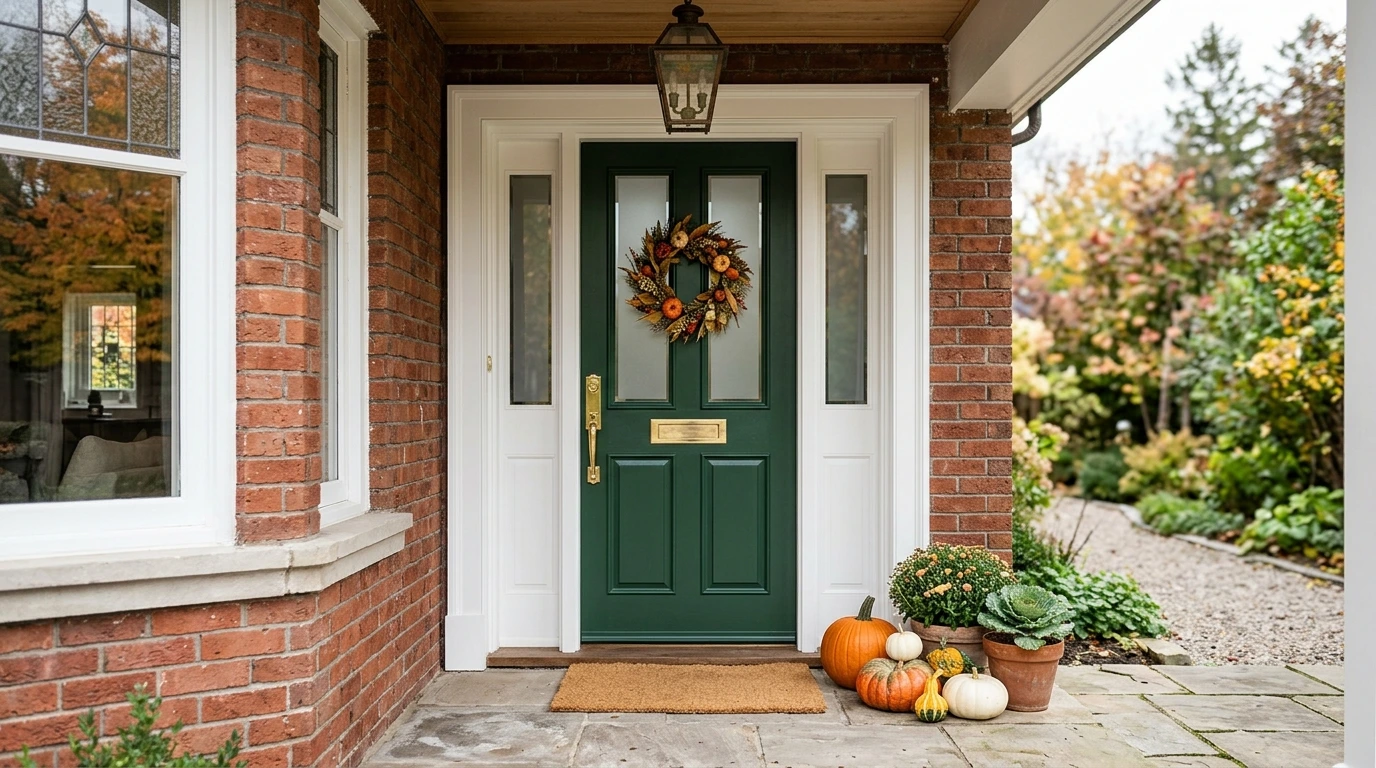
A steel entry door is tough, but it is not maintenance-free. Steel door rust repair, small dents and tired paint are all easier to handle in the fall, before snow, slush and de-icing salt start working on the bottom of the door. A few hours of care now can help the door keep its finish and its seal through the cold months. This guide explains how to inspect a steel door, fix dents and surface rust properly, repaint it in the right conditions and protect it all winter.
How a Steel Entry Door Is Built
Most residential steel doors are not solid metal. They are made of two thin steel skins bonded to an insulating foam core, with stiles and rails along the edges and a frame that holds the weatherstripping. This construction is what makes them insulating, rigid and relatively light, and it also explains how they wear.
The steel itself is protected by a factory coating and paint. As long as that layer is intact, the metal is shielded from moisture and rust has little chance to start. Once a scratch, chip or dent cracks the finish down to bare steel, moisture reaches the metal and rust begins. In a Quebec winter, salt carried in on boots and splashed by shovels can speed the process up considerably.
Because the skin is thin and bonded to the core, you cannot hammer a steel door back into shape like a car panel. Repairs are about filling, sealing and protecting the surface. You can compare current models on our exterior doors page.
A Fall Inspection, Top to Bottom
Choose a dry, mild day, open the door wide and look at it in good light, on both faces and along every edge. Problems on a steel door usually start small and in predictable places, and catching them in the fall gives you time to repair them before the cold sets in. Take photos of anything you find so you can follow it from year to year.
Do not forget the parts around the door. Weatherstripping, the sweep, the threshold and the exterior caulking around the frame all affect how the door performs, and they are much easier to adjust or replace before the first freeze. A door that seals well also keeps snow and meltwater away from its lower edge.
- Bottom edge and corners: bubbling paint or orange streaks are the first signs of rust.
- Around the lockset and kick plate: keys, rings and boots chip the finish here.
- Glass insert frame: water can collect along the lower edge of the insert.
- Dents and scratches: any break in the paint that shows grey metal.
- Weatherstripping and sweep: tears, flattening or gaps of daylight.
- Hinges and threshold: loose screws, sagging or a threshold that no longer meets the sweep.
Steel Door Rust Repair, Step by Step
Surface rust, the light orange film or small spots that form where the paint has chipped, is very manageable if you treat it early. The goal is to remove the rust completely, protect the bare metal right away and rebuild the paint layers. Work on a dry day and within the temperature range printed on the products you use.
Bare steel can start to rust again quickly, so do not leave a sanded area unprotected overnight. Apply a rust-inhibiting metal primer as soon as the surface is clean and dry, then follow with the topcoat once the primer is ready, according to the label. If you cannot finish in one day, stop before sanding rather than after.
If the paint is bubbling up from the bottom edge rather than from a visible chip, the rust may be coming from inside, where water has entered the door. Sanding the face will not fix that. Look at the bottom of the door, and if the edge is swollen or soft, the door may be near the end of its life.
- Wash the area with mild soap and water, rinse and let it dry completely.
- Remove loose paint and rust with a wire brush and fine sandpaper down to clean metal.
- Feather the edges of the surrounding paint so the repair blends in.
- Wipe off the dust and degrease with a cleaner suited to painted metal.
- Apply a rust-inhibiting metal primer the same day.
- Finish with an exterior paint suited to metal, in thin coats.
Fixing Dents in a Steel Door Skin
A dent in a steel door is more than a cosmetic issue if it has cracked the paint, since it opens a path for rust. Because the skin is bonded to the foam core, the usual method is to fill the dent rather than try to pull it out. A two-part body filler, the kind used for car repairs, works well on small and shallow dents.
Sand the dent and a small margin around it to give the filler something to grip, apply thin layers rather than one thick one, and sand each layer smooth once it has cured. When the surface is flush and even, prime and paint it like any rust repair. Deep creases, tears in the skin or dents near the lock edge that affect how the door closes are better assessed by a professional, since they may mean the door slab needs to be replaced.
Painting a Steel Door Before the Cold Arrives
Fresh paint is the best protection a steel door can have, but timing matters. Paint needs a minimum temperature to cure properly, and in Quebec, autumn nights can drop below that limit long before the days feel cold. Read the label, check the forecast for the following nights and paint early in the season rather than late.
Before choosing a colour, check the door manufacturer's recommendations. Very dark colours on a door that faces the sun, especially behind a storm door, can trap heat and cause the skin to warp. The manufacturer's instructions also tell you which paint types are compatible with the factory finish.
Plan the job so the door can dry before it has to close tightly against the weatherstripping, otherwise fresh paint can stick to the seal and peel off. Work early in the day so the door can stay open or slightly ajar while the paint sets, and keep an eye on security and on heat loss in the meantime. Check the drying times on the label, since paint usually takes longer to harden fully than to feel dry to the touch.
- Remove or mask the hardware, glass trim and weatherstripping.
- Lightly scuff the whole face so the new paint bonds well.
- Use an exterior paint suited to metal, applied in thin, even coats.
- Paint panels in the same order each time to avoid lap marks.
- Let the door dry before closing it firmly against the seals.
Protecting a Steel Door Through the Winter
Once the door is repaired and painted, winter habits keep it that way. Sweep snow and slush off the threshold rather than letting it pile up against the bottom of the door, and keep de-icing salt on the steps and walkway instead of throwing it against the door. A doormat outside and another inside reduce the amount of salty water that ends up on the lower edge.
From time to time, wipe the bottom of the door with a damp cloth to remove salt residue, then dry it. If you see frost or condensation on the inside face of the door, especially along the edges, check the weatherstripping and the threshold first, since an air leak is the usual cause. Our guide on energy efficiency explains why sealing matters as much as insulation.
Locks also need a little care. A dry lubricant in the lock cylinder and a few drops of silicone on the hinges and latch keep everything working smoothly in the cold. Avoid oil-based products on the weatherstripping, since they can damage the rubber.
When Repair Is No Longer Enough
Repairs make sense as long as the problems are on the surface. When rust has eaten through the skin, the bottom edge is swollen or soft, the skin is separating from the core, or the door no longer closes squarely against its weatherstripping, repainting will only hide the damage for a while. A rotten or damaged frame is another sign that the whole entrance should be looked at.
In that case, replacing the door and frame together is usually the more sensible way to get a sound seal, good insulation and a secure entrance again. It is also a chance to choose a new style, for example from our executive panel doors.
If you are not sure whether your door is still worth repairing, a professional look at the bottom edge, the frame and the threshold usually settles the question. Unisson Groupe manufactures and installs windows and doors from its base in Saint-Laurent and serves the Greater Montreal area. To see what replacing your entry door would involve, you can request a free in-home estimate.
Frequently Asked Questions
Can you fix rust on a steel door?
Yes, if the rust is on the surface. Remove it down to clean metal, apply a rust-inhibiting primer the same day and repaint. If the rust has gone through the skin or comes from inside the door, replacement is usually the better option.
Can you pop a dent out of a steel door?
Usually not, because the steel skin is bonded to the foam core behind it. Small dents are filled with two-part body filler, sanded smooth, primed and painted. Large or deep damage may require replacing the door slab.
What paint should I use on a steel entry door?
Use an exterior paint suited to metal, over a rust-inhibiting primer on any bare spots. Check the door manufacturer's instructions for compatible paints and colours, since very dark colours can cause heat buildup on sunny exposures.
Can I paint a steel door in cold weather?
Only within the temperature range on the paint label, including overnight temperatures while it cures. In Quebec, that usually means painting earlier in the fall rather than waiting until late in the season.
Why does my steel door rust at the bottom?
The bottom edge gets the most snow, slush and de-icing salt, and chips there go unnoticed. Water can also enter the door from below if the bottom seal or edge is damaged. Keeping the threshold clear and repairing chips early helps prevent it.