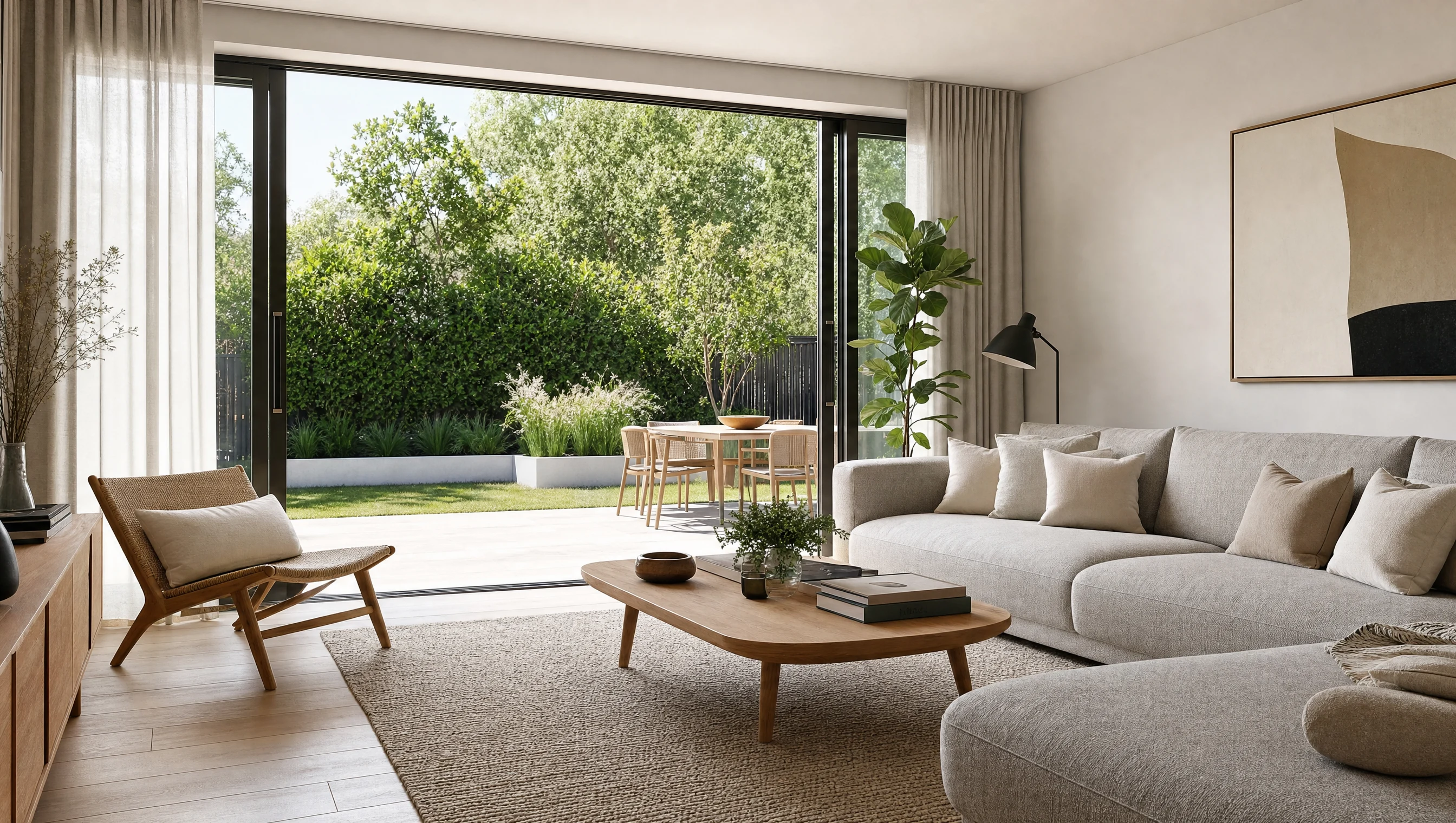
A patio door is the single largest piece of glass in most Quebec homes, and it works hard all year — flooding your living space with daylight in winter and opening to the deck in summer. Choose well and it adds light, ventilation, and curb appeal without leaking heat. Choose poorly and it becomes the coldest, draftiest wall in the house. This guide covers every decision, from sliding versus hinged to glazing, hardware, sizing, and rebates.
Patio Door Types Available in Quebec
Most Quebec homeowners choose between two main formats: sliding patio doors and hinged French doors. Each has clear advantages depending on the room size, traffic flow, and the look you are after. Sliders save floor space because the panels glide past each other instead of swinging into the room, which makes them ideal for condos, smaller dining areas, and any spot where a swinging panel would collide with furniture.
Hinged French doors deliver a more traditional, symmetrical look and open wide enough to move a sofa or a barbecue through in one trip. Folding bi-fold doors take that idea further, stacking several panels to one side for a near-complete wall opening — a dramatic choice for back decks and three-season porches, though they carry a higher price and require more careful weatherproofing for our climate.
A garden door splits the difference: one fixed panel paired with one operating door, giving you a large glazed area with a single, easy-to-seal opening. For families who only need to pass through occasionally, a garden door often delivers the best balance of light, security, and energy performance.
- Sliding patio doors — space-saving, smooth operation, large glass area
- Hinged French doors — classic look, double opening for moving furniture
- Folding (bi-fold) doors — full opening, popular for back decks and porches
- Garden doors — one fixed panel plus one operating door
Glass and Insulation Choices that Matter
A patio door is mostly glass, which means glazing has a bigger impact on comfort and energy than the frame itself. In Quebec, insist on Low-E coatings on the surfaces facing the sealed argon-filled cavity — the coating reflects radiant heat back into your room in winter and rejects unwanted solar gain in summer. A warm-edge spacer around the perimeter prevents the cold-edge condensation that plagues older patio doors on a frosty morning.
Triple-pane glass is increasingly the default in new builds, especially on the South Shore and in Laval where open-field wind chill is harsher. Expect a 15% to 20% premium over double-pane, but the payoff is real: a measurably warmer interior surface, far less condensation, and a noticeable drop in road and neighbour noise thanks to the extra pane and air space.
For a door this large, the U-factor of the whole unit deserves attention. A quality triple-pane vinyl patio door can reach a U-factor near 1.4 W/m²·K or better, while an older aluminum slider might sit closer to 3.0 — a difference you feel directly as cold air spilling off the glass and pooling at your feet.
- Low-E coatings on the surfaces facing the sealed cavity
- Argon gas fill for roughly 10% better insulating value
- Warm-edge spacer to reduce perimeter condensation
- Triple-pane glass for north-facing or wind-exposed walls
- Whole-door U-factor of 1.4 W/m²·K or lower for cold-climate comfort
Frame Material: Vinyl vs Aluminum vs Composite
Vinyl (UPVC) frames remain the best overall value for residential Quebec installations. They insulate well thanks to multi-chamber profiles, never need painting, and resist the corrosion that road salt and humidity inflict on metal. For the vast majority of homes in Greater Montreal, a quality vinyl patio door delivers the performance you need at a sensible price.
Aluminum frames are strong and slim, which appeals to modern, large-format designs, but bare aluminum is a thermal bridge that frosts over in a Quebec winter. If you want the aluminum look, choose a thermally broken frame — one with an insulating barrier separating the inside and outside metal — and expect to pay more for it.
Composite frames combine the structural strength of fiberglass with finishes that mimic vinyl or wood, and they barely expand or contract through our wide temperature swings. They are gaining ground in premium projects in Westmount and Outremont where homeowners want maximum stability and a refined look, though they sit at the top of the price range.
Hardware that Stands Up to Quebec Use
Hardware is where a patio door quietly succeeds or fails over its life. Look for stainless steel rollers and tracks, brass or sealed bearings, and a multi-point locking system that pulls the panel tight against the weatherstripping at several points rather than just the handle. These details determine whether a sliding door still glides smoothly after ten winters or grinds to a halt with a single seized roller.
Pay attention to the weatherstripping and the sill design too. A good patio door uses interlocking weatherstrips and a thermally optimized sill that drains meltwater outward instead of letting it pool and refreeze. For families with young children or for ground-floor access, a foot-operated lock or a security bar adds peace of mind without complicating daily use.
- Stainless steel tracks and rollers that resist salt corrosion
- Multi-point locking for security and a tighter air seal
- Brass or sealed roller bearings for smooth long-term operation
- Thermally optimized, self-draining sill to manage meltwater
- Adjustable rollers so the door can be re-levelled years later
Sizing Tips for Common Quebec Layouts
Standard patio door widths are 60 inches (152 cm) and 72 inches (183 cm), which cover most existing openings in Montreal duplexes and bungalows. Newer condos and custom builds increasingly call for 96-inch (244 cm) units to maximize a view, and many manufacturers offer three- and four-panel configurations for very wide walls. Always confirm the height as well, since ceiling heights vary widely between a 1950s bungalow and a new build.
Before ordering anything, measure the rough opening width, height, and squareness — a door installed into an out-of-square opening will never seal or operate correctly. If you are converting a window into a patio door, or widening an existing opening, the wall may be load-bearing, in which case a structural header and proper support are mandatory and should be confirmed by your installer or an engineer.
Think about the swing or slide direction relative to your furniture and traffic flow. A hinged door that swings inward needs clear floor space; a slider needs a clear stacking side. Mapping this out on paper before you order prevents the common regret of a door that opens the wrong way for your room.
Rebates and Energy Programs for Patio Doors
Patio doors qualify for the same major programs as windows in 2026, which can take a real bite out of the cost. Rénoclimat treats an exterior door replacement as an eligible measure when you upgrade to an ENERGY STAR-certified unit, and the federal Canada Greener Homes program has supported up to $5,000 in combined upgrades across windows, doors, and insulation under a single application.
Because a patio door is a large glazed assembly, choosing an ENERGY STAR model certified for Climate Zone D — the zone covering Greater Montreal, Laval, and the South Shore — is both a performance decision and a rebate requirement. Confirm the certification in writing before you sign, and make sure your contractor holds a valid RBQ licence, which is your protection and is often tied to rebate eligibility.
A reputable installer will identify which programs apply to your project, supply the certification paperwork, and file the rebate forms on your behalf at no extra charge. It is worth asking about active Hydro-Québec envelope incentives as well, since timing your installation to an open program can change the total cost noticeably.
Next Steps
Choosing a patio door is easier when you can see and operate the real thing. Visit our showroom in Saint-Laurent to compare sliding, garden, and French configurations side by side, feel the difference between double and triple glazing, and test the smoothness of multi-point hardware for yourself.
When you are ready, request a free estimation for your home. Our team measures every opening on site, flags any structural considerations, recommends the right configuration for your room and orientation, and provides a fixed-price written quote — and we manufacture locally in Saint-Laurent and back every installation with a long-term warranty.
Frequently Asked Questions
Are sliding patio doors energy efficient?
Yes. Modern vinyl sliding doors with triple-pane glass, Low-E coatings, and warm-edge spacers perform comparably to hinged French doors in Quebec winters. The key is the glazing package and a quality multi-point lock that pulls the panel tight against continuous weatherstripping.
What is the typical price range for a patio door in Quebec?
Expect $2,500 to $5,000 installed for a quality vinyl patio door in 2026, depending on size, glazing, and configuration. Triple glazing and wider three- or four-panel units sit at the upper end, while standard double-pane sliders are more affordable.
Can a patio door be added to an existing wall?
Yes, but it requires an engineering review when the wall is load-bearing. Walls supporting the roof or an upper floor need a properly sized header and structural support, which your installer or an engineer must confirm before any cutting begins.
How do I clean and maintain my patio door?
Wipe the tracks monthly to clear grit, lubricate the rollers and locks once a year with a non-greasy silicone product, and clean the glass with a vinegar-water mix or commercial glass cleaner. Check the weatherstripping each fall and clear the sill drainage holes so meltwater cannot pool and refreeze.
Should I choose a sliding door or a French door?
Choose a slider when floor space is tight or furniture sits nearby, since the panels glide instead of swinging into the room. Choose hinged French doors when you want a wide opening for moving furniture and a more traditional, symmetrical look, provided you have clear floor space for the swing.
Do patio doors qualify for rebates in 2026?
Yes. An ENERGY STAR-certified patio door is an eligible measure under Rénoclimat and the federal Canada Greener Homes program, which has supported up to $5,000 across doors, windows, and insulation combined. Choose a model certified for Climate Zone D and confirm your contractor holds a valid RBQ licence.